
Custom Drone For Fertilizer Manufacturer & Product

Pioneering the Future of Precision Chemical & Organic Fertilizer Dispersion with Enterprise UAV Ecosystems

Whitepaper: Industrial-Grade Drone Integration for Fertilizer Manufacturers

Analyzing global market dynamics, manufacturing supply chains, and advanced agronomy workflows.

1. Global Industrial Landscape of Fertilizer Drones

The intersection of precision agriculture and chemical manufacturing is witnessing a structural transformation driven by Unmanned Aerial Vehicles (UAVs). Historically, fertilizer manufacturers operated in a silo, focusing solely on chemical formulations, granule optimization, and distribution logistics. However, modern environmental directives and commercial efficiency targets demand a systemized approach to product application. Custom drones developed for fertilizer manufacturers have transitioned from luxury field tools into essential agricultural infrastructure.

Globally, nations face the dual pressure of increasing food yields while minimizing environmental pollution. Runoff from traditional broadcast spreaders causes severe eutrophication in water bodies and leads to soil acidification. To counter this, drone-based target spraying and dry granular dispersion are taking center stage. By designing drones tailored to the physical characteristics of specific fertilizers (such as granule density, hygroscopic index, and fluid mechanics), manufacturers can ensure that their products are applied at precise rates. This synergy decreases chemical waste, improves nutrient absorption kinetics, and aligns with modern ESG (Environmental, Social, and Governance) corporate guidelines.

2. The Chinese Drone Manufacturing Supply Chain & Factory Advantages

Why do top-tier global fertilizer firms look to China for specialized drone manufacturing? The answer lies in the unparalleled structural completeness of the drone hardware and software ecosystem in regions like Shenzhen and Guangdong. Our operations capitalize on this localized advantage, delivering significant cost savings, engineering agility, and robust quality control metrics.

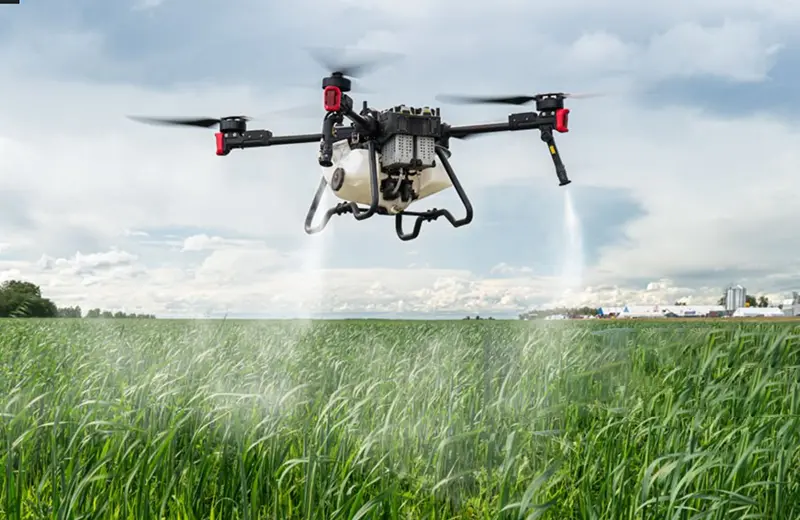
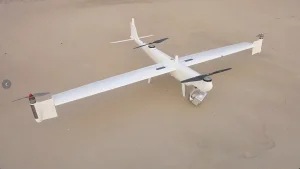
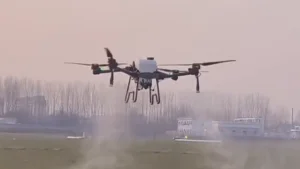
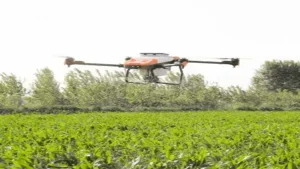
Chinese factories operate at scale, housing the complete supply chain: from high-tensile carbon fiber weaving plants to advanced multi-rotor Brushless DC (BLDC) motor factories, and high-energy-density lithium battery engineering bays. By sourcing core components directly from these localized pipelines, we produce custom crop sprayer drones featuring high payload capacities (such as the AL4-50 and AL4-20 series) without structural overhead. This proximity allows for rapid prototyping, enabling custom modifications like corrosion-resistant tanks, specialized centrifugal nozzles, and integrated radar altimeters. This level of rapid engineering iteration remains unmatched anywhere else in the world, giving procurement officers a clear path to high-margin, scalable drone operations.

3. Localized Applications and Agronomy Integrations

Custom fertilizer drones are engineered to adapt to highly specific environmental dynamics. In the broad fields of the United States Midwest and Latin America, large payload drones deploy dry granulated micro-nutrients across thousands of contiguous hectares. In contrast, the terraced terrains of Southeast Asia and Japan call for highly agile multirotors equipped with advanced terrain-following radar and SLAM (Simultaneous Localization and Mapping) systems to apply liquid foliar fertilizers to vertical orchards and stepped paddies.

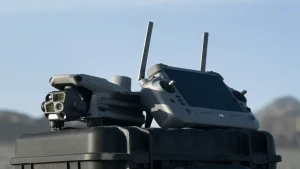
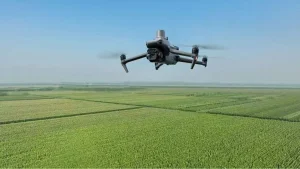
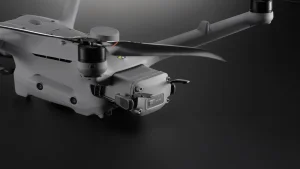
By coupling multispectral imaging payloads—such as the DJI Mavic 3M—with fertilizer application systems, crop managers can generate real-time Normalized Difference Vegetation Index (NDVI) charts. These maps highlight nitrogen deficiencies before they are visible to the naked eye. The drone's onboard computer translates this data into a variable-rate application (VRA) mission profile. Over the course of a single growing season, this loop reduces total chemical input by up to 30% while simultaneously increasing localized crop yields.

UUUFLY Edge-to-Cloud Performance Matrix

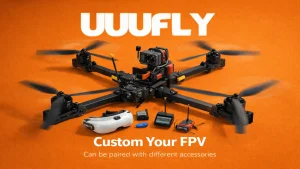
We transform drone operations from single-flight tools into scalable enterprise infrastructure. By combining edge-computed computer vision, highly resistant carbon fiber airframes, and certified encrypted transmission protocols, we deliver observable efficiency increases for agriculture, power grid inspections, and public safety programs.

30%
Pesticide & Fertilizer Reduction
99.7%
Dual-Spectrum Defect Detection
5x
Faster 3D Mapping & Modeling
80%
Battery Fast-Charge in 30 Min

4. Industry Megatrends: The Next Generation of Agritech UAVs

Looking forward, several key technological shifts will redefine drone-based agricultural distribution:

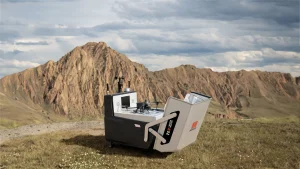
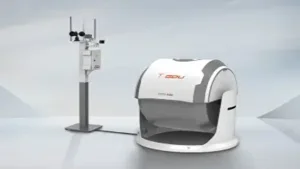
  • Autonomous Docking Stations: Autonomous systems like the GUD K01 and K02 docks represent the future of "hands-free" crop management. Drones execute automated paths, land, swap batteries, refill their fertilizer hoppers, and resume application paths without human pilots on-site.
  • Alternative Power Plants: Hydrogen-fuel-cell and hybrid gas-electric engines are extending flight times beyond the 1-hour threshold. This allows high-capacity fertilizer payloads to match the performance of legacy tractor sprayers.
  • Deep AI Analytics: Integrating advanced machine learning models on edge computing devices allows real-time analysis of weed infestation, insect threats, and crop lodging. This shifts drones from simple sprayers to predictive field diagnostics networks.

5. Technical Specifications and Hardware Architecture

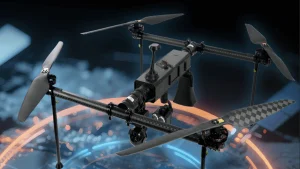
Industrial drones engineered for fertilizer application must withstand highly corrosive and dusty field conditions. Unlike standard commercial photography drones, fertilizer UAVs utilize high-strength carbon fiber frames (such as our AL4 series) and IP67-rated hermetically sealed motors. The distribution system relies on peristaltic or impeller pumps that prevent corrosive chemical contact with sensitive mechanical parts. Additionally, the integrated batteries must feature specialized thermal management systems and robust protective casing (like the WB37 and Matrice 4D custom equivalents) to sustain high-amperage draws in hot crop-field climates.
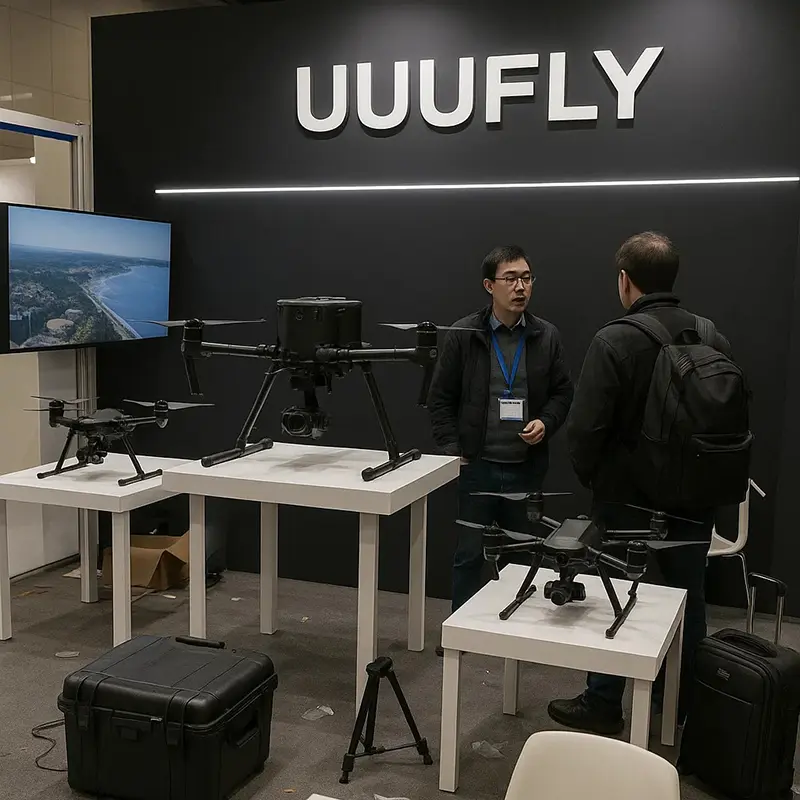
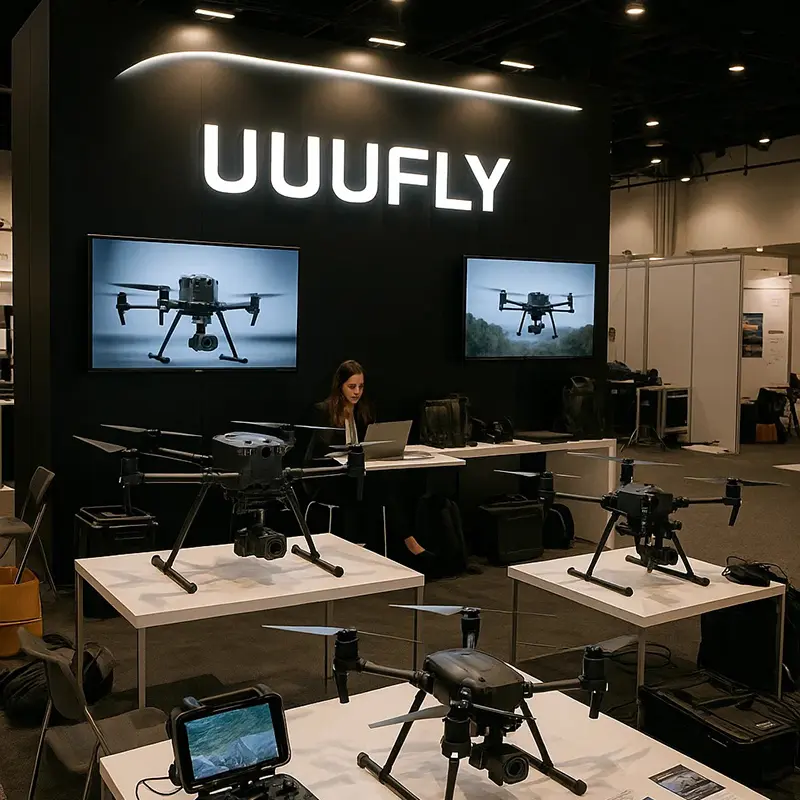
Why Choose UUUFLY

Trusted industrial UAV infrastructure designed to meet strict regulatory and compliance protocols.

Evidence-Based Performance

Over 500,000 core components successfully shipped and deployed. Trusted by 300+ enterprise clients across more than 30 global cities with a robust year-over-year repurchase rate.

Industrial Reliability

Strict structural designs, complete EMC/EMI shielding, and resilient data governance frameworks designed to exceed aerospace compliance parameters and operate reliably in harsh environments.

Compliance & Security First

All hardware is CE, FCC, and RoHS certified. Telemetry and payload links are secured using AES-256 military-grade encryption, with option for on-premise cloud servers to guarantee complete data sovereignty.

Our Leadership Team

Combining decades of aerospace engineering, computer vision research, and international logistics delivery.

Founder / CEO
Gordon Guan

Former industrial UAV product lead; drives product architecture, standardization and global ecosystem partnerships.

Product Architecture Industry Solutions Ecosystems
COO
Dr. Sara Li

Computer vision & autonomy specialist focusing on sensor fusion, target detection and mission decision systems.

SLAM & Perception Multispectral Systems Edge-Cloud Pipelines
Head of Solution
Ken Zhu

Drives localization, operational training, and partner-led delivery across the Middle East, Pakistan, and Central Asia.

Program Delivery Drone Training Customer Success
Head of Hardware
Alex

Aerospace & electrical engineer focusing on structural integrity, EMC/EMI shielding, and payload integration.

Structure & EE Sensor Integration Reliability Engineering
Head of AI
Dr. Lin Zhao

Leads deep learning model training and mission orchestration to optimize detection accuracy and flight path strategies.

Detection Models Orchestration MLOps
Marketing Director
Ivy Chen

Drives localization, vertical industry campaigns, and partner network expansions across LATAM and MENA.

Vertical Solutions Localization Partner Network

Core Business & Real-World Operations

How UUUFLY drones power modern industries with reliable data collection and precision payloads.

UUUFLY Industrial Drone Operations

Power & Industrial Infrastructure Inspection

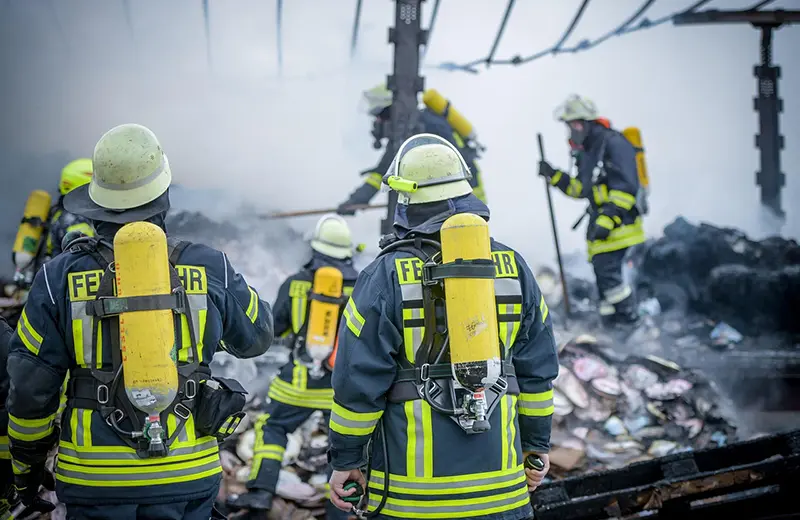
Our drone solutions feature millimeter-level positioning and encrypted live video links. Combining dual-spectrum defect detection with AI-based target recognition improves overall defect discovery efficiency by 40%. IP67 motors and carbon-fiber propellers ensure reliable operations in extreme environments, while our rapid-charge dock kits charge batteries to 80% in 30 minutes. Across grid pilot testing, our AI models achieved a 99.7% defect detection accuracy.

UUUFLY Precision Agriculture Drones

Precision Agriculture & Sprayer Solutions

Deploying multispectral payloads combined with AI analytics yields early detection of crop pests and diseases with 98% accuracy. Variable-rate spraying limits pesticide usage by 30%. Supported by high-capacity 50Ah power packs and corrosion-resistant chemical hoppers, a single battery charge enables covering over 200 mu (~16 acres), resulting in operational cost reductions of 20% to 30% for commercial farms.

UUUFLY Smart City UAV Mapping

Smart City & 3D Mapping Operations

We combine advanced LiDAR sensors with oblique photogrammetry payloads to deliver 0.05-meter accurate 3D mapping. This pipeline accelerates geospatial modeling speeds by 5x while reducing urban mapping budgets by 60%. Utilizing GDPR-compliant data links over 5G networks, our workflows power real-time cloud data pipelines that enhance planning operations by 300%.

Industrial Verticals Portfolio

Industrial Spraying & Procurement FAQ

Answering high-intent technical questions for supply chain managers, agronomists, and drone buyers.

How do you optimize custom drones to prevent corrosion from liquid and granular fertilizers?

Chemical fertilizers are highly corrosive to structural frames and electronics. Our custom agricultural drones utilize aerospace-grade carbon fiber tubes protected with specialized anti-corrosion epoxies. The internal components, including ESCs (Electronic Speed Controllers) and distribution pumps, are sealed inside an IP67 rating chassis, isolating the flight controller from chemical vapors. Standard chemical tanks are blow-molded with high-density polyethylene (HDPE), which resists acidic and basic solutions.

What is the efficiency gain of using drone spraying versus traditional tractor broadcasting?

Agricultural sprayer drones reduce overall chemical consumption by 30% via variable-rate application (VRA) guided by multispectral NDVI mapping. Additionally, unlike heavy tractors, drones fly above the crop canopy, eliminating crop crushing (which saves 3-5% in yield losses) and preventing soil compaction. This results in an estimated operating cost reduction of 20% to 30% depending on farm topography and layout.

Can your drones deploy solid/granular fertilizers as well as liquid sprays?

Yes, our agricultural platforms feature modular payload designs. Operators can quickly swap out the liquid tank and centrifugal nozzle manifold for a granular spreader system. This setup uses a high-speed centrifugal disc with an active feed mechanism, ensuring precise and uniform distribution of solid granules (such as urea, ammonium sulfate, or pelletized biological agents) over a swath width of up to 10 meters.

What battery options are recommended for high-frequency daily operations?

For intensive, fast-cycling work, we construct smart high-capacity batteries (such as custom equivalents to the DJI Matrice and WB37 designs) that interface with our GUD charging stations. These cells feature localized battery management systems (BMS) that prevent overcharging, monitor cell health, and facilitate high-amperage rapid charging—allowing fleets to hit 80% capacity within 30 minutes.