 UUUFLY
1 / 5
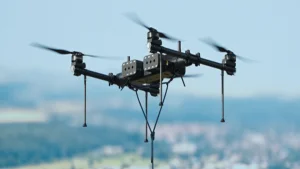
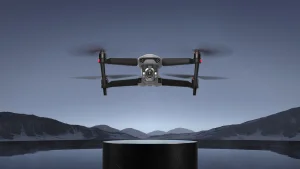
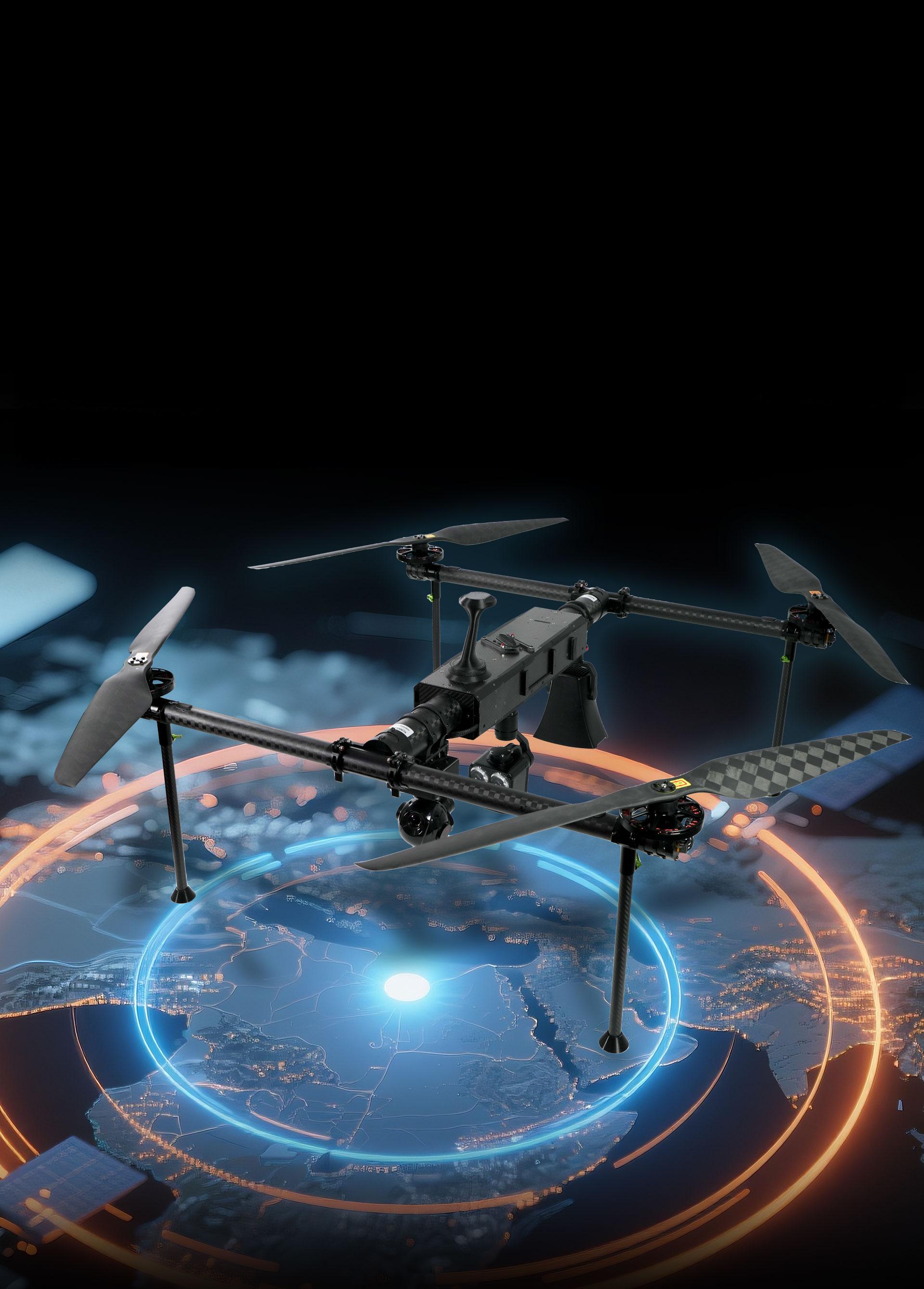
It achieves a max horizontal speed of 30 m/s and withstands winds up to 12 m/s, delivering reliability and efficiency in diverse environments.
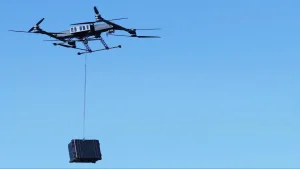
With a maximum flight time of 120–180 minutes and a 10 kg payload capacity, KEEL ensures stable, long-range operations for demanding missions.
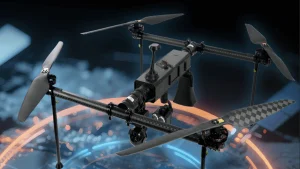
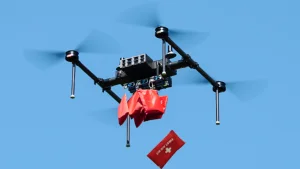
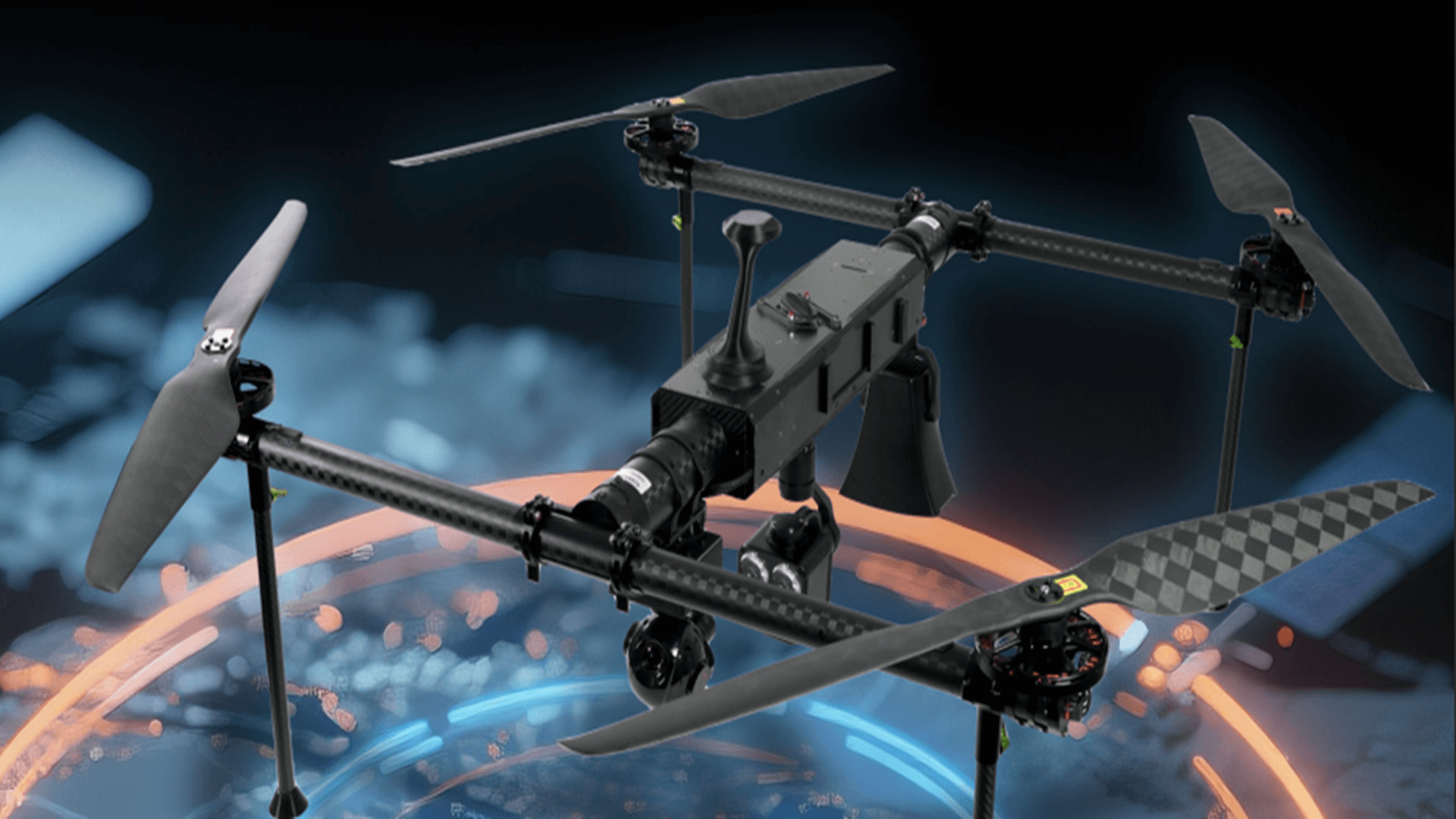
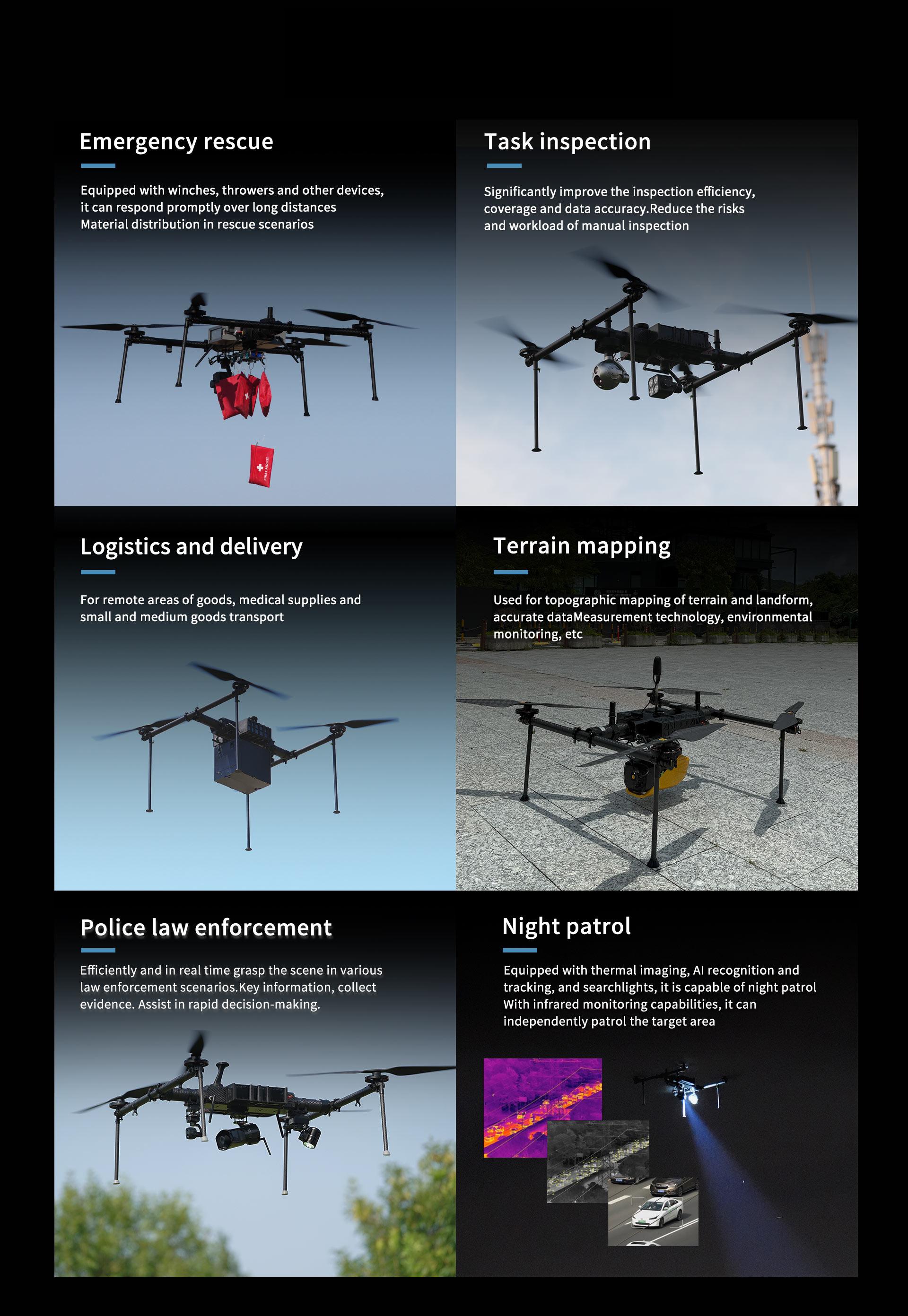
Engineered with upper/lower expansion interfaces and Pandora quick-release, KEEL adapts seamlessly to logistics, inspection, and emergency response tasks on a unified platform.
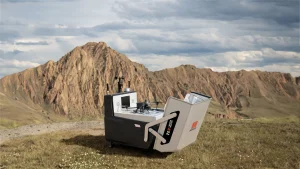
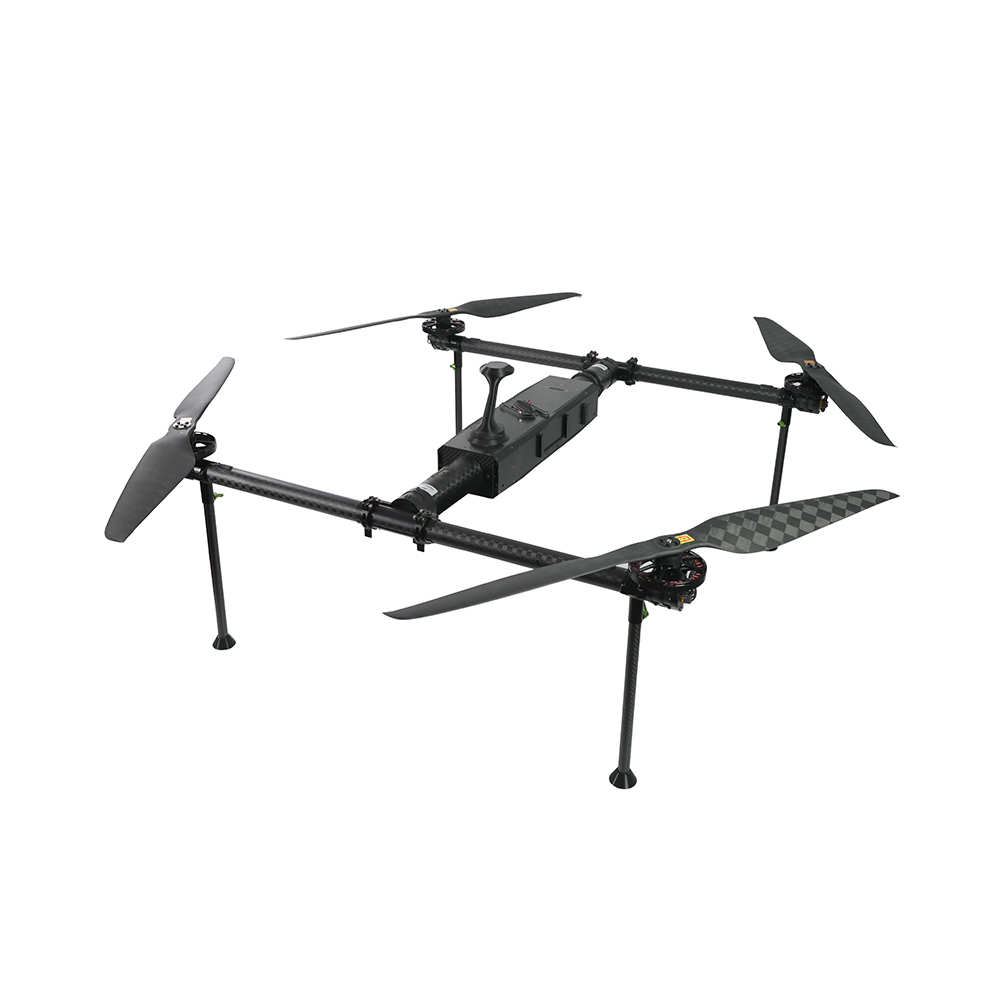
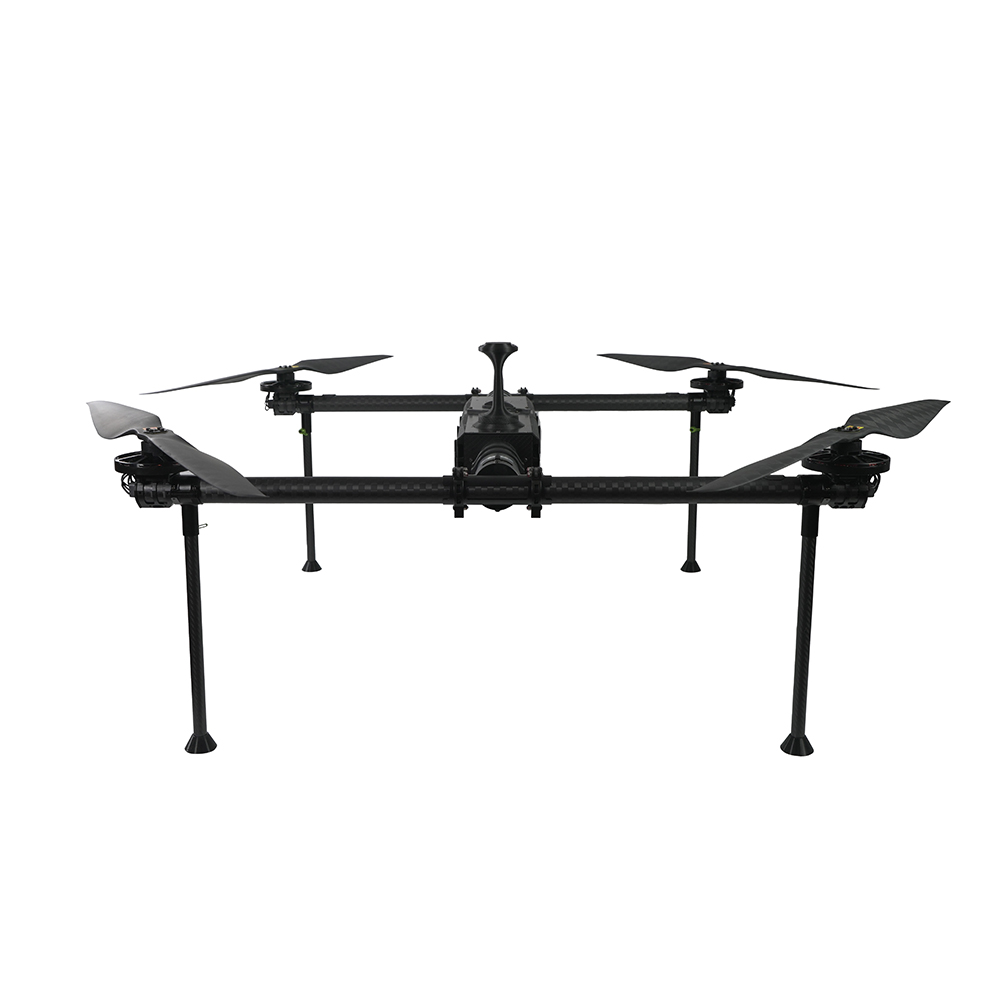
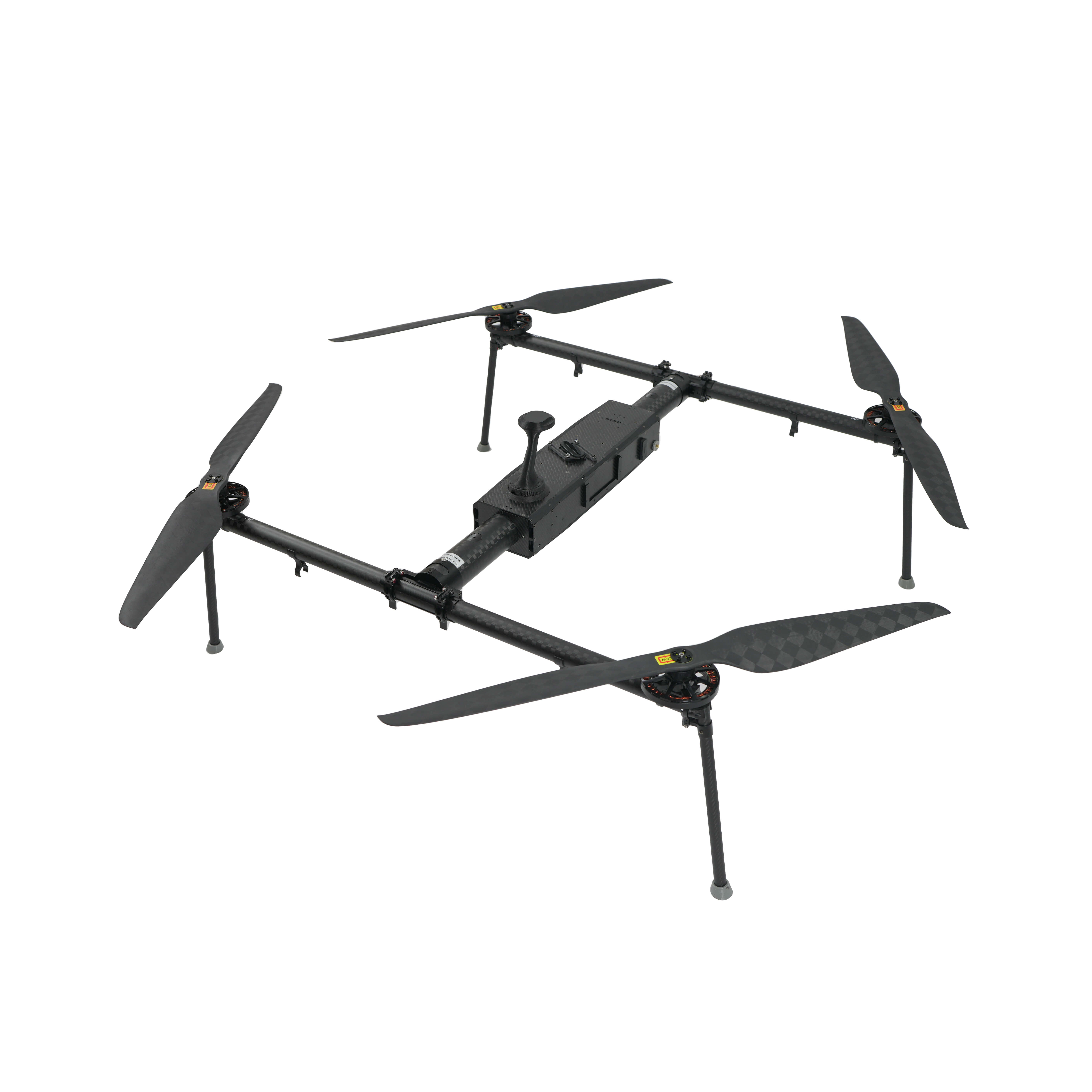
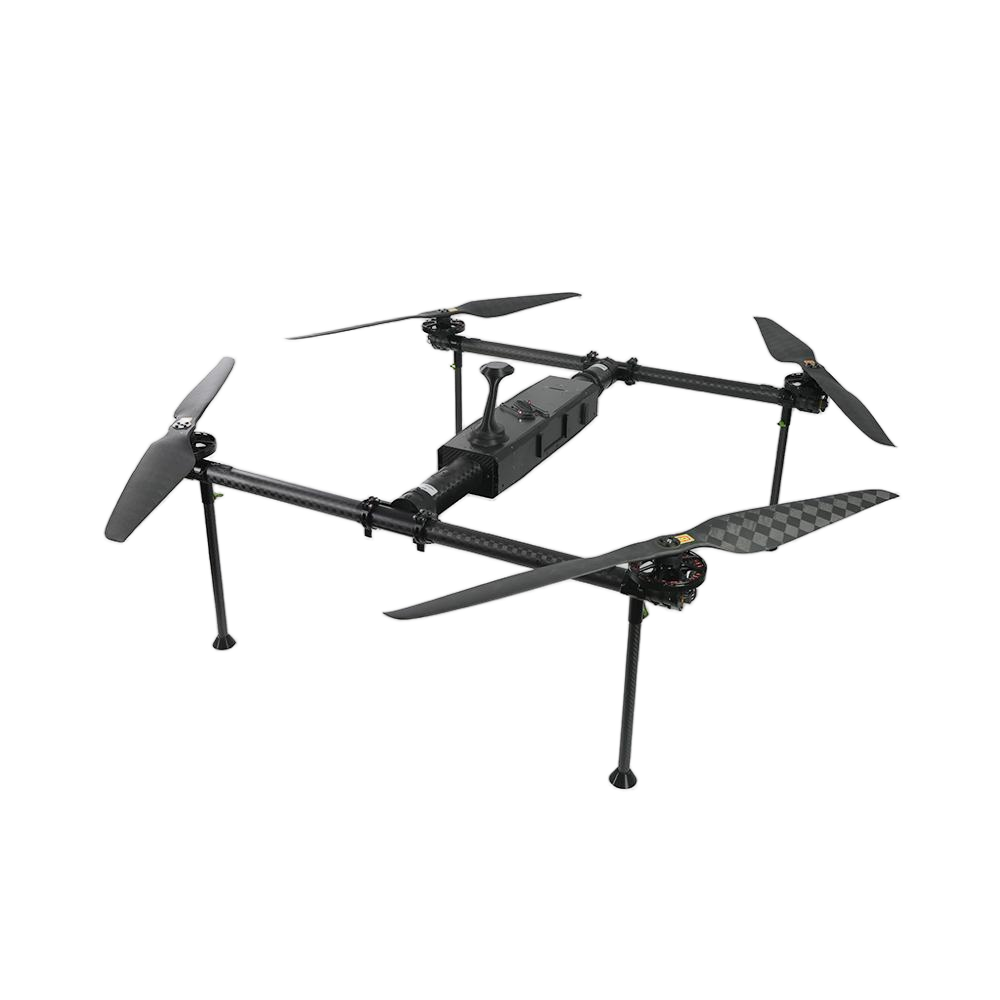
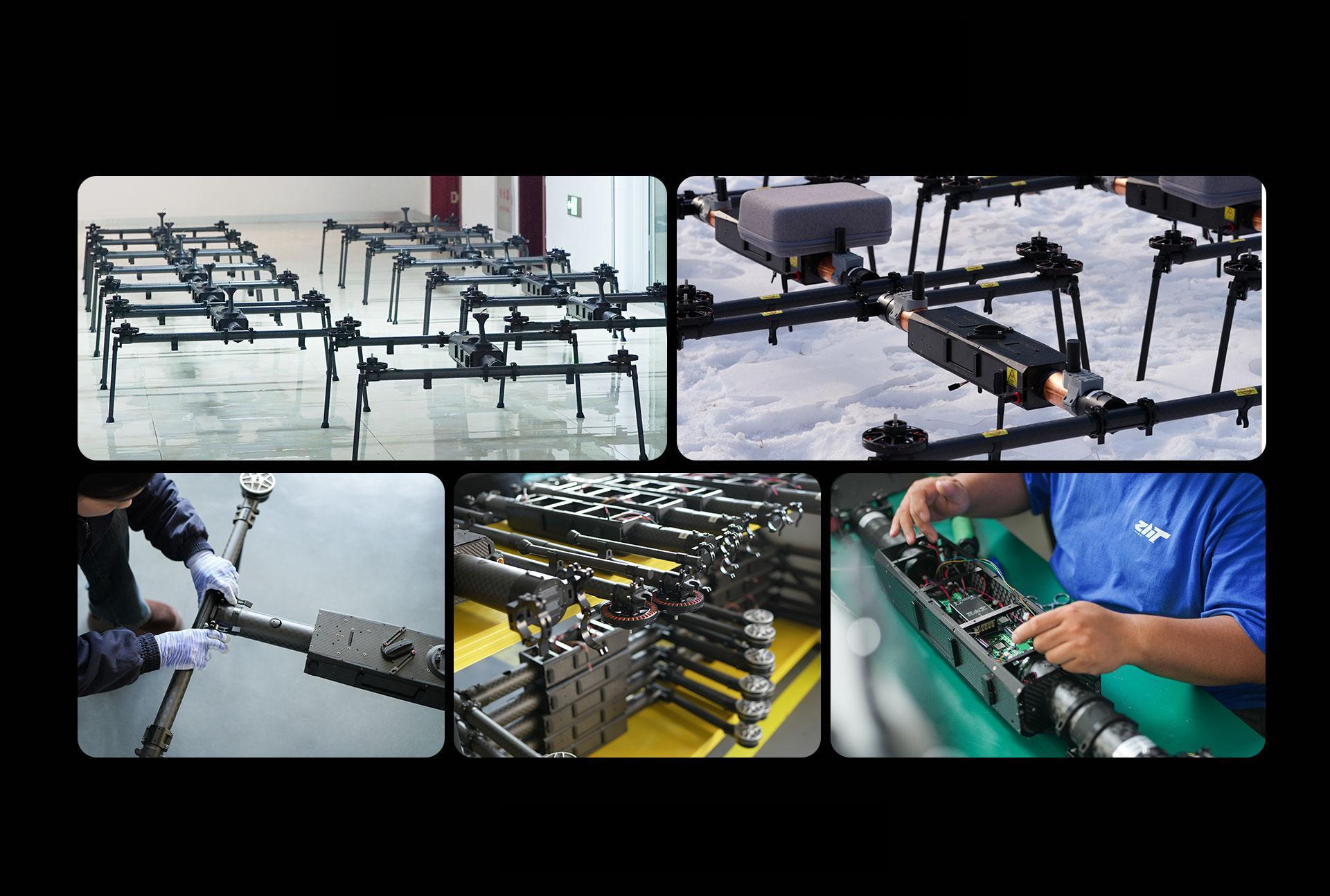
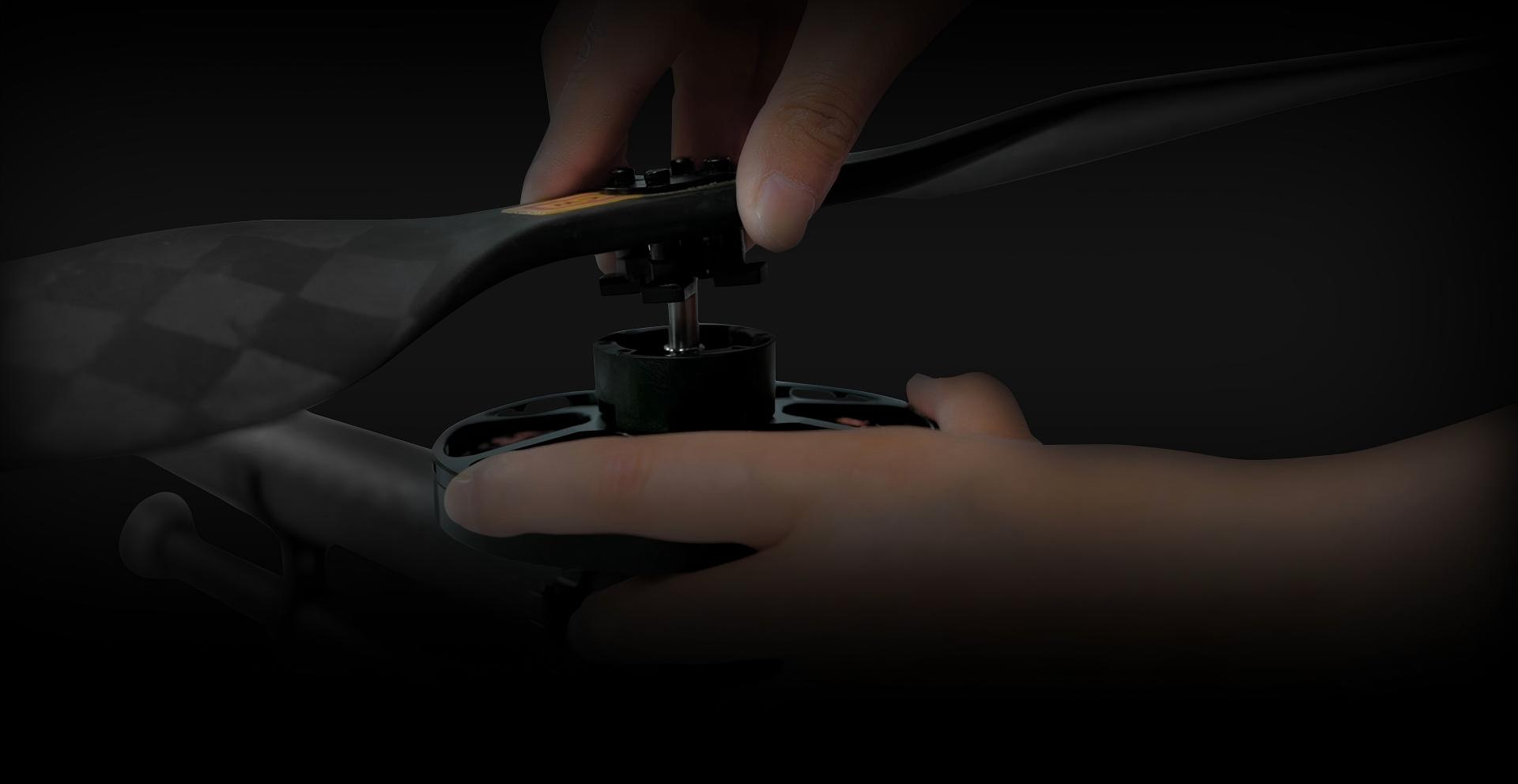
Featuring quick-release carbon fiber arms and interchangeable components, the drone allows single-operator assembly in 60 seconds and flexible payload integration.
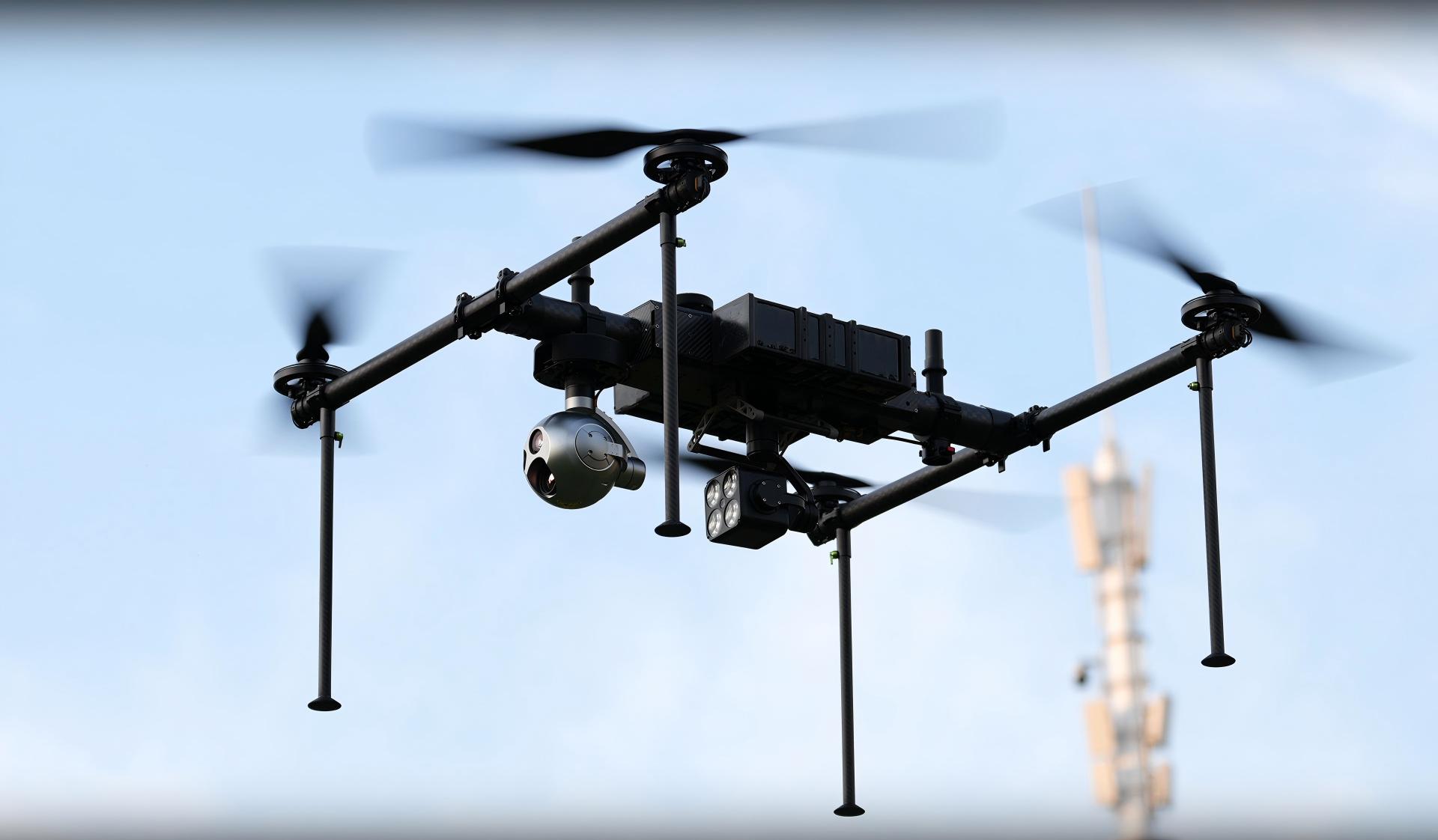
The keel's advanced lightweight construction ensures exceptional ease of transportation and rapid deployment, without compromising structural integrity or payload capacity.
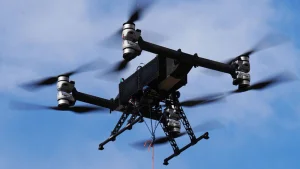
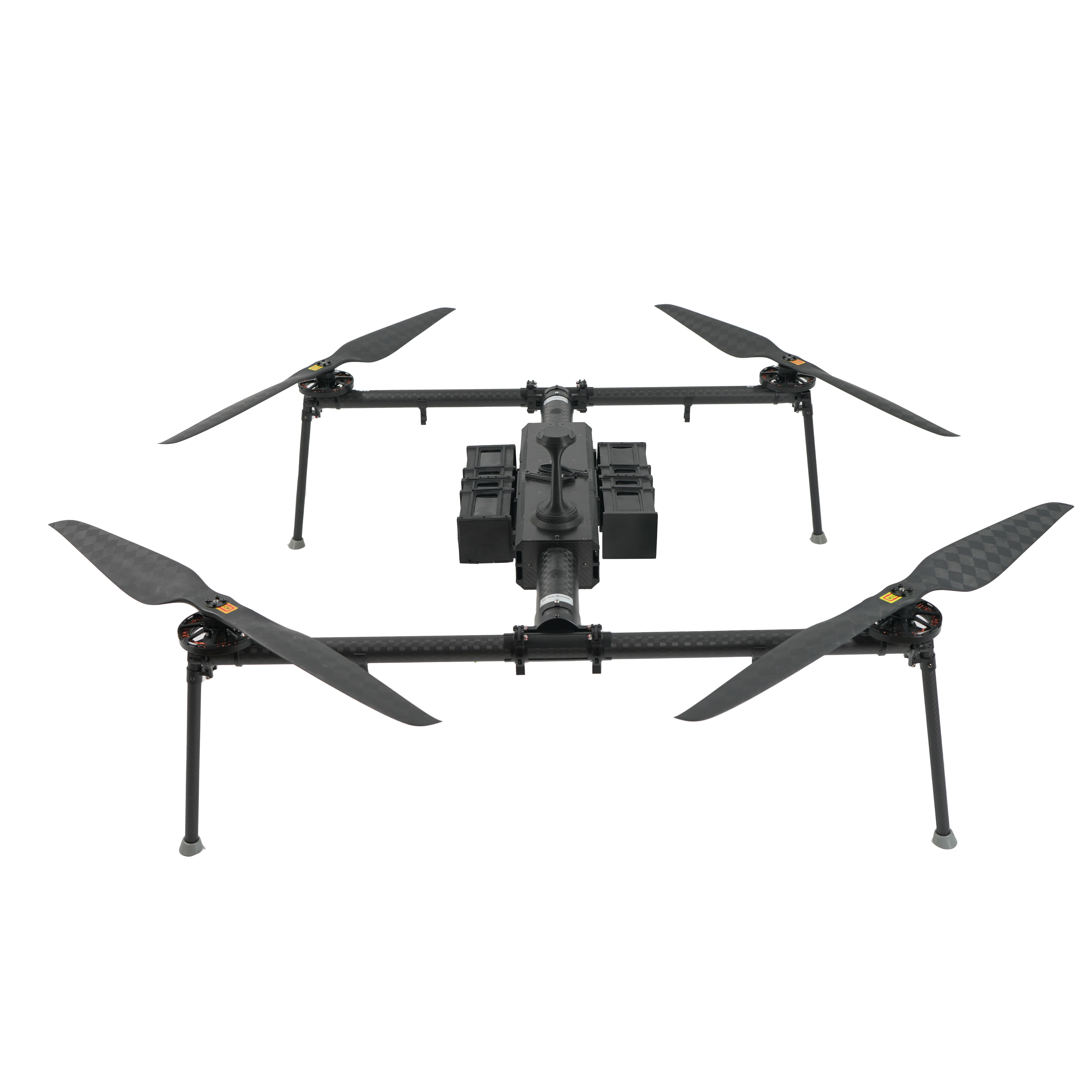
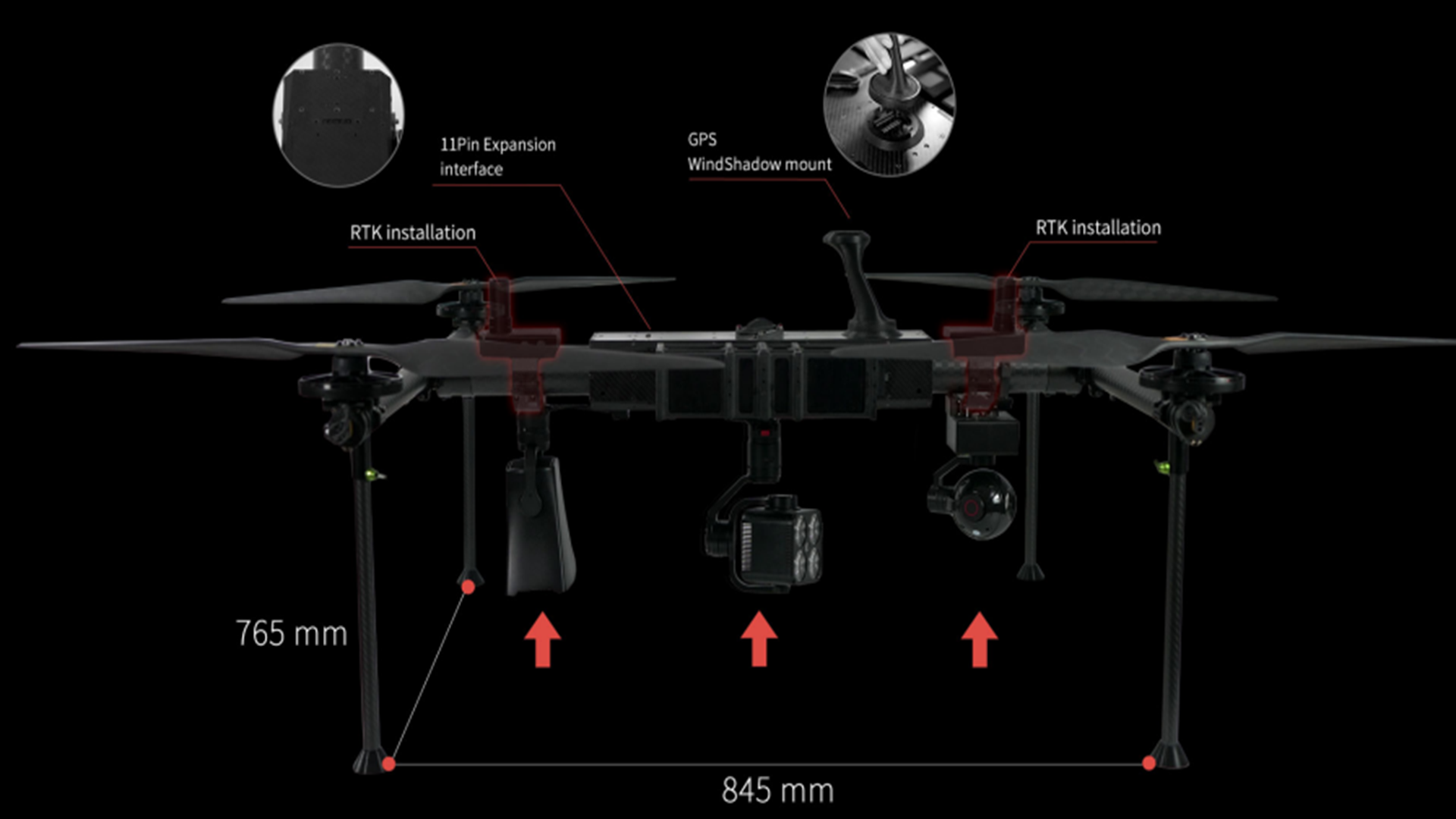
KEEL provides two upper expansion interfaces (*commonly used for GPS and secondary development) and two wire-through holes (*commonly used for RTK installation and upper and lower mount positions). It is equipped with one Pandora quick-release interface and a data transmission interface at the bottom. Under the condition of sufficient space, it can carry seven devices simultaneously.
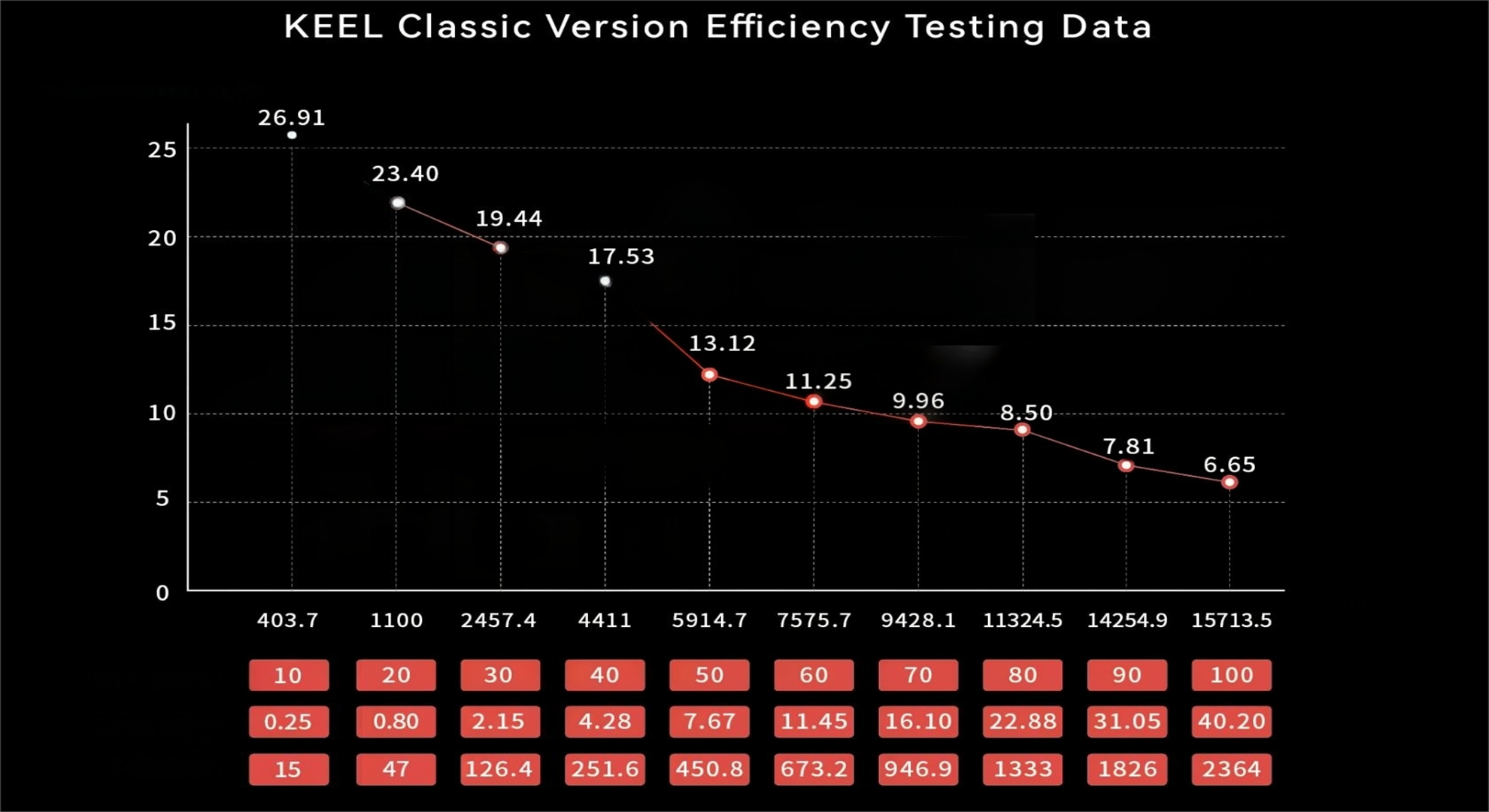
This graph demonstrates KEEL's high power efficiency of up to 25 g/W at lower thrust levels, with performance data systematically measured across the full throttle range, providing transparent and reliable benchmarks for operational planning.
| 「KEEL 」Long Endurance Drone PNP Parameters | ||||
|---|---|---|---|---|
| Specification Item | KEEL Classic Version | KEEL Exploration Version | KEEL Voyage Version | |
| Flight Platform | ||||
| Basic Parameters | Deployed Dimensions (Arms & landing gears installed, props unfolded) | 1700 mm × 1700 mm × 540 mm (*with GPS mount) | ||
| Disassembled Dimensions (Arms installed, landing gears & props removed) | 1010 mm × 1010 mm × 150 mm (*GPS mount removed) | |||
| Packed Dimensions | 1150 mm × 420 mm × 355 mm | |||
| Max. Symmetric Wheelbase | 1250 mm | |||
| Material | Carbon fiber composite and Aircraft Aluminum | |||
| Deployment Way | Modular quick disassembly, tool-free | |||
| Weight (excl. battery) | 4 kg | |||
| Weight (incl. battery * 2 pcs) | 10.08 kg | 10.44 kg | 10.22 kg | |
| Max. Takeoff Weight | 20 kg | |||
| Max. Loading Capacity | 10 kg | |||
| Flight Parameters | The Farthest Flight distance (Flying at a constant speed of 12 m/s when without payload) | 86.4 km | 115.2 km | 129.6 km |
| Max. Flight Time (Flying at a constant speed of 10 m/s when without payload) | 120 min | 160 min | 180 min | |
| Endurance (*Cruising at 30 m AGL with constant speed of 10 m/s) | ≤90 min @ 1.3 kg payload ≤60 min @ 5 kg payload ≤30 min @ 10 kg payload |
≤120 min @ 1.3 kg payload ≤104 min @ 2 kg payload ≤70 min @ 5 kg payload ≤35 min @ 10 kg payload |
≤130 min @ 1.3 kg payload ≤35 min @ 10 kg payload |
|
| Max. Ascent Speed | 10 m/s (≤3kg payload) | |||
| Max. Descent Speed | 7 m/s (≤3kg payload) | |||
| Max. Horizontal Speed | 30 m/s (*No wind, without payload) | |||
| Max. Angular Velocity | 150°/s | |||
| Max. Pitch Angle | 25° | |||
| Hovering Accuracy (* RTK not used) | vertical ±0.2 m;horizontal ±0.1 m | |||
| Max. Flight Altitude | Standard propeller ≤3800 m;Plateau propeller ≤7000 m (* Limited by the plateau environment, the maximum payload is reduced to 3 kg at 5000 m) | |||
| Max. Wind Speed Resistance | 12 m/s (Wind Force 6) | |||
| Working Environment | ﹣20 ℃ ~ +55 ℃ | |||
| Power System | ||||
| Motor | Model | ZHT T10 KV83 | ||
| Propeller | Size | 3212 Carbon fiber straight propeller | ||
| Quick Disassembly | Support | |||
| Quantity | CCW×2 + CW×2 | |||
| Electric System | ||||
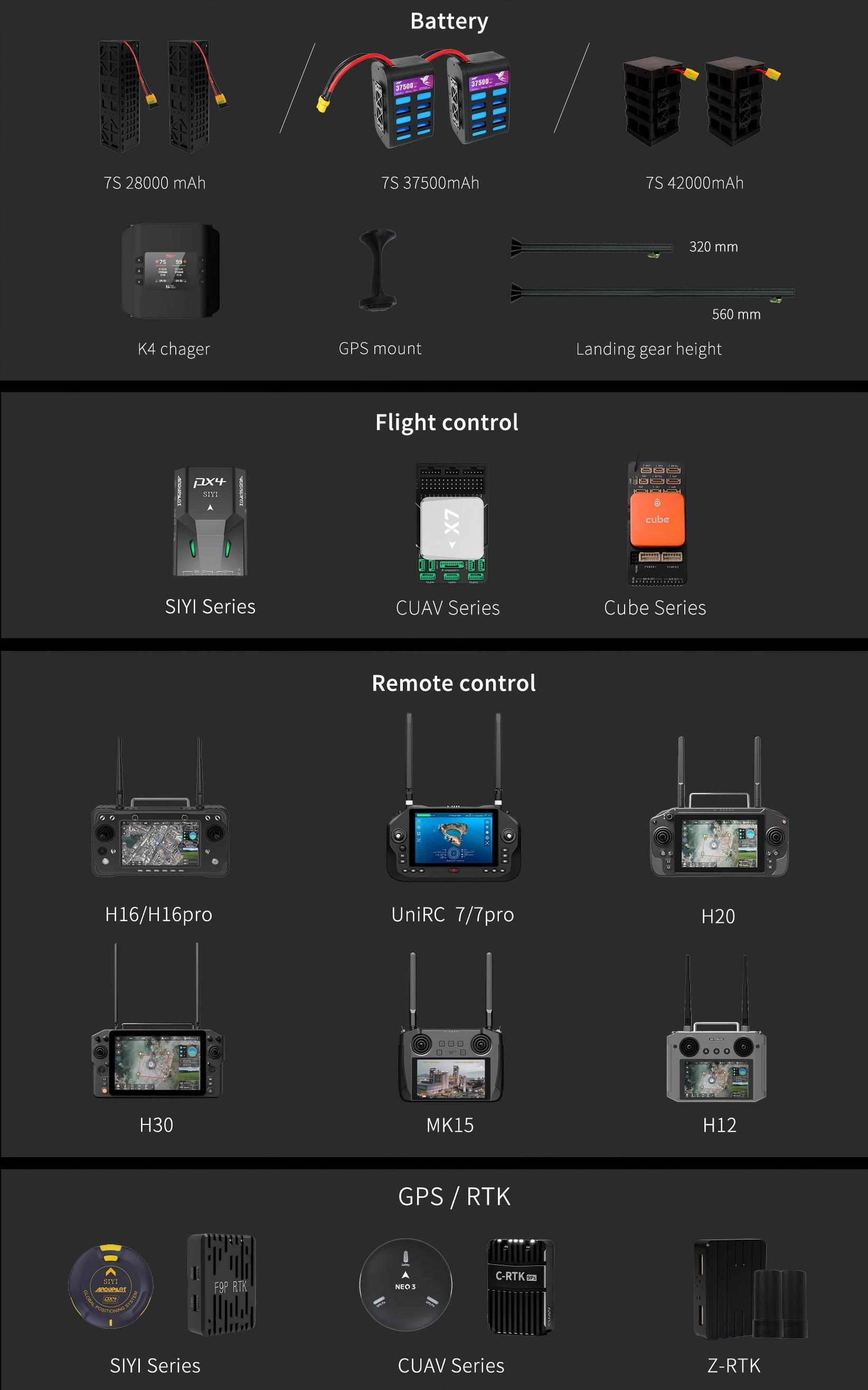
| Battery | Battery type | Li-ion | ||
| Capacity | Single: 7S 28000 mAh; Total: 14S 28000 mAh |
Single: 7S 37500 mAh; Total: 14S 37500 mAh |
Single: 7S 42000 mAh; Total: 14S 42000 mAh |
|
| Quantity and Configuration | 2 Packs(14S1P) | |||
| Weight (*Single pack, Incl. protective case) | ≈3.04 kg | ≈3.22 kg | ≈3.11 kg | |
| Size (*Single pack, Incl. protective case) | 282 mm x 75 mm x 88 mm | 190 mm x 97 mm x 115 mm | 192 mm × 100 mm × 115 mm | |
| Energy | Single: 725.2 Wh; Total: 1450.4 Wh |
Single: 943.25 Wh; Total: 1886.5 Wh |
Single: 1037.4 Wh; Total: 2,074.8 Wh |
|
| Nominal Voltage (*Single pack) | 25.9 V (3.7 V/cell × 7 cells) | 25.2 V (3.6 V/cell × 7 cells) | 24.15 V (3.45 V/cell × 7 cells) | |
| Fully-charged voltage | 59.08 V(4.22 V/cell × 14 cells) | 59.5 V(4.25 V/cell × 14 cells) | 59.5 V(4.25 V/cell × 14 cells) | |
| Continuous discharge current and rate (* Single pack) | 84A(3C) | 111A(3C-4C) | 84 A(2C) | |
| 60s peak discharge rate and current (* Single pack) | 280A (10C) | 300 A(8C) | 168 A(4C) | |
| Charging current and rate (* Single pack) | 28A(1C) | 74A(2C) | 42 A(1C) | |
| Charger | Model | K4 | ||
| Charging way | Intelligent balance, support 2 batteries charging at the same time | |||
| Max. Charging power | AC 400 W,DC 600 W x2 | |||
| Parallel charging power/current | 800 W / 35 A | |||
| Input voltage | AC 100-240 V,DC 10-34 V | |||
| Output voltage | DC 1-34 V | |||
| Charging duration | About 3 - 4 hours (At a current of 15A, the two batteries are charged simultaneously and the cells are balanced.) |
About 2 - 3 hours (At a current of 20A, the two batteries are charged simultaneously and the cells are balanced.) |
||
What is the maximum payload capacity and flight time of the KEEL drone?
The KEEL drone supports a maximum loading capacity of 10 kg. Depending on the version and payload weight, its maximum flight time ranges from 120 minutes up to 180 minutes without payload.
How fast can the KEEL drone fly and what wind levels can it withstand?
It achieves a maximum horizontal speed of 30 m/s (under no wind and without payload) and is built to withstand maximum wind speeds of up to 12 m/s (Wind Force 6).
How quickly can the drone be assembled?
Thanks to its quick-release carbon fiber arms and interchangeable components, a single operator can complete the assembly within 60 seconds without requiring additional tools.
What expansion interfaces does the drone provide?
The drone features two upper expansion interfaces (often used for GPS and secondary development), two wire-through holes (commonly used for RTK installation), a Pandora quick-release interface, and a data transmission interface at the bottom. Under appropriate space conditions, it can carry up to seven devices simultaneously.
What are the main battery configurations and capacities?
The power system uses Li-ion batteries with 2 packs (14S1P) configuration. Capacities vary by model: the Classic has a total of 14S 28000 mAh (1450.4 Wh), the Exploration has a total of 14S 37500 mAh (1886.5 Wh), and the Voyage has a total of 14S 42000 mAh (2074.8 Wh).
What is the charging duration for the battery packs?
Using the K4 charger, the Classic version takes about 3 to 4 hours to fully charge (at 15A current), while the Exploration and Voyage versions require about 2 to 3 hours (at 20A current) with simultaneous charging and cell balancing.