Buy AI-Powered Inspection Drones: Manufacturers & Enterprise Solutions

Empowering the Global Low-Altitude Economy with High-Endurance UAV Systems, Automated Flight Workflows, and Advanced Data Compliance.

Navigating the Global Low-Altitude Economy

The industrial inspection landscape is undergoing a paradigm shift. Today's global enterprises face growing structural demands: aging power grid infrastructures, strict ESG compliance mandates, rising labor costs, and safety constraints on manned field inspections. The solution lies in transitioning unmanned aerial vehicles (UAVs) from simple remote tools to fully automated digital infrastructure.

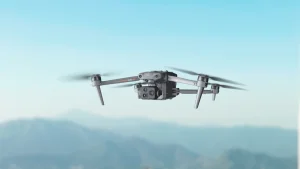
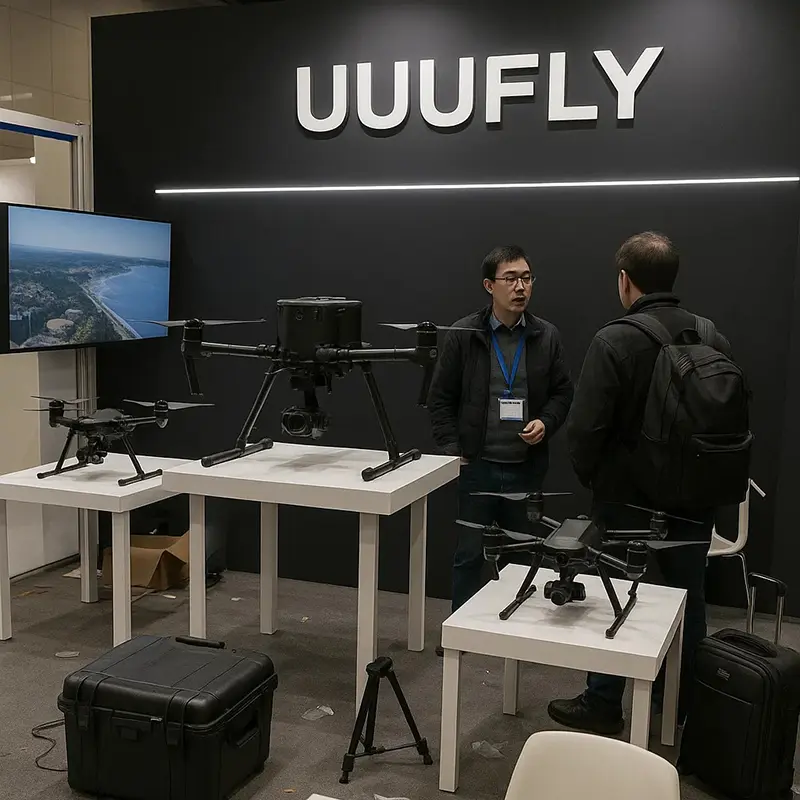
At UUUFLY, we manufacture and engineer high-reliability, AI-powered inspection drones to solve structural operational challenges. Our platform leverages computer vision, RTK precision positioning, and edge computing to automate complex inspection pipelines across continents.
  • Infrastructure Security: Real-time asset monitoring and autonomous anomaly identification.
  • Operational Efficiency: Eliminating manual climb-downs and ground hazard exposure for engineering teams.
  • Actionable Intelligence: Fast edge processing translating raw feeds into standardized defect reports.
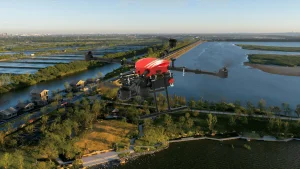
Industrial Drone Inspection Site
500k+
Components Shipped
Deploying trusted structural, avionics, and power components worldwide.
300+
Enterprise Clients
Empowering major energy suppliers, agricultural cooperatives, and cities.
30+
Global Cities
Providing infrastructure-level flight operations and data collection.
99.7%
Defect Accuracy
Proprietary AI model performance in automated inspection runs.

Our Mission & Technological Scope

We close the loop of Discover → Decide → Execute → Trace across energy, agriculture, and urban administration.

Power & Industrial Inspection

Utilizing dual-spectrum defect detection combined with millimetric RTK positioning, we increase defect discovery efficiency by 40%. UAVs maintain stable operations in electromagnetically noisy high-voltage environments. Fast-charging smart docks restore battery level to 80% in 30 minutes, keeping flight downtime to a minimum.

Precision Agriculture

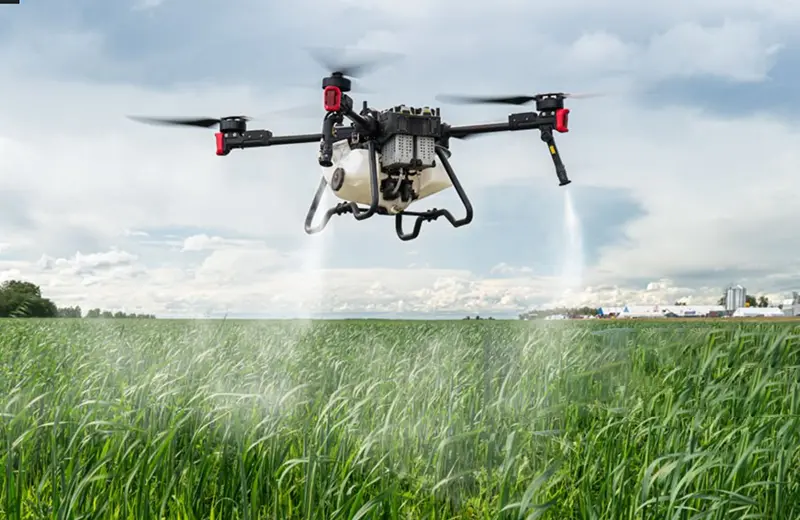
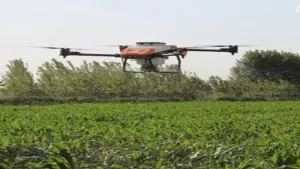
By deploying multi-spectral sensors alongside targeted analytics, we diagnose crop health anomalies with up to 98% accuracy. The automated variable spraying mechanism reduces overall chemical volume by 30%, allowing operators to treat over 200 mu (~16 acres) per flight, lowering local operations budgets by 20-30%.

Smart City & Mapping

Combining high-point-density LiDAR with multi-angle oblique photogrammetry renders centimeter-accurate (0.05m) 3D digital twins. Modeling workflows are completed 5x faster at a 60% lower run cost. Standardized files compile quickly, enhancing city planning cycles by nearly 300%.
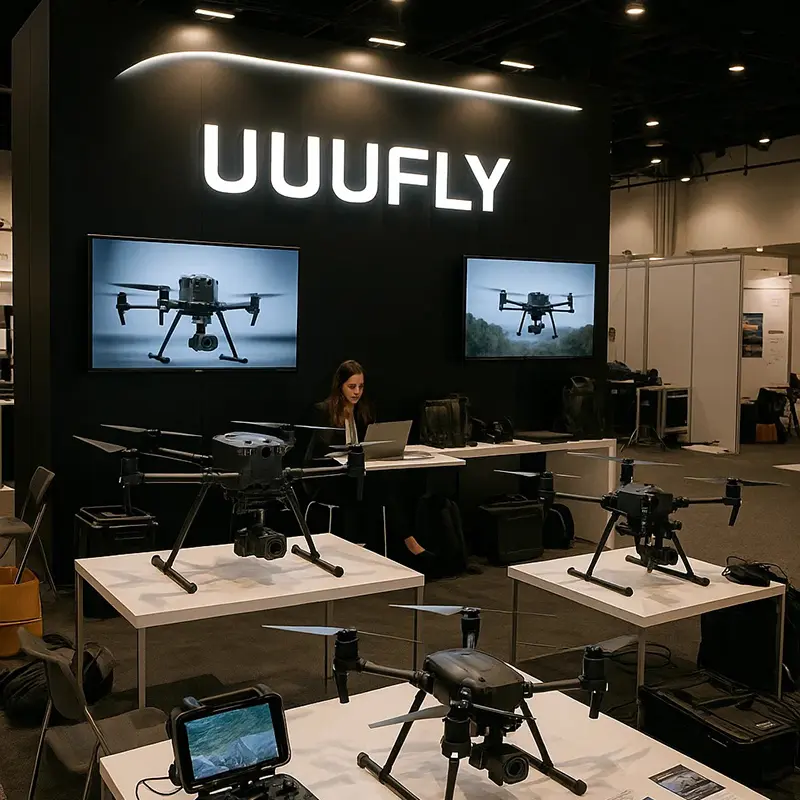
Drone Development Engineering Lab

Technical Architecture & R&D Roadmap

Building high-performing industrial drones requires engineering rigor across hardware limits, communication channels, and automated data processing. Our development roadmap targets safety, longevity, and intelligent adaptability to enable scalable operations in demanding environments.

  • AI-Driven Flight Control: Transitioning from path-following algorithms to real-time onboard dynamic path adjustment and obstacle evasion.
  • End-to-End Encryption: Integrated AES-256 links securing ground-station feeds and cloud APIs to prevent interception.
  • Multi-Payload Interface: Standardized physical and mechanical interfaces allowing fast swaps between thermal cameras, gas sensors, mapping payloads, and LiDAR.

Technological Milestones & Horizons

Phase I: Industrialization
Autonomous Docking Systems & Real-Time RTK Network Integration
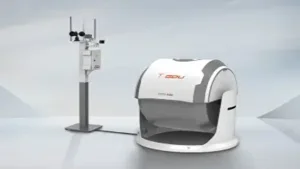
Successfully deployed autonomous charging docks with weather stations. Integrated RTK positioning networks to achieve centimeter-level flight paths for utility inspections.
Phase II: Next-Gen Autonomy
Onboard Neural Processors & Dual-Spectrum Fusion
Integrating low-power AI accelerators on the drone mainboard. Real-time fusion of thermal and optical streams allows onboard defect classification, reducing network transmission loads.
Phase III: Green Energy Integration
Hydrogen Fuel Cell Implementation for Extended Range
Designing lightweight hydrogen storage tanks and hybrid power control modules. Aims to double maximum flight times for long-range pipeline surveys and remote mapping operations.

Proven Value & Compliance Standards

Providing industrial-grade manufacturing standards and data protection protocols.

Global Certification

Our drone designs and manufacturing lines comply with CE, FCC, and RoHS standards, ensuring seamless importation, safety, and legal operation across major international jurisdictions.

Secure Data Sovereignty

Our solutions feature end-to-end data encryption. Organizations can choose between secure cloud endpoints or complete on-premise offline hosting to satisfy strict local data protection laws (e.g. GDPR).

24/7 Multi-Language Support

Our global technical team provides support in CN, EN, JP, RU, FR, ES, and AR, ensuring timely deployment assistance, training, and troubleshooting for enterprise flight operations.

Industrial Application Verticals

Discover how our specialized drone designs serve safety, energy, building inspection, environmental protection, and modern farming operations.

Leadership & Engineering Rigor

Meet the team driving aerospace development, hardware integration, computer vision, and global deployment.

Founder / CEO

Grodon Guan

Former industrial UAV product lead; drives product architecture, standardization and ecosystem partnerships.

Product Architecture Industry Solutions Ecosystem
COO

Dr. Sara Li

Computer vision & autonomy specialist focusing on sensor fusion, target detection and mission decision systems.

SLAM & Perception Dual/Multispectral Edge-Cloud
Head of Solution

Ken Zhu

Drives localization and partner-led delivery across the Middle East, Pakistan, and Russia.

Program Delivery Drone Training Customer Success
Head of Hardware

Alex

Aerospace & electrical engineer focusing on payload integration, EMC/EMI and reliability design.

Structure & EE Sensor Integration Reliability
Head of AI

Dr. Lin Zhao

Leads model training and mission orchestration to optimize detection accuracy and decision strategies.

Detection Mission Orchestration MLOps
Marketing Director

Ivy Chen

Drives localization and partner-led delivery across LATAM & MENA regions.

Vertical Solutions Localization Partner Network

Our Vision for the Future

To become a core infrastructure provider for the global low-altitude economy. We continuously integrate 5G, edge AI, and clean hydrogen energy to drive standardized, intelligent, and green aerial operations.

By connecting custom hardware, autonomous docks, and cloud orchestrators, we enable utility operators, agriculturalists, and emergency responders to leverage autonomous drones as a repeatable and scalable resource.
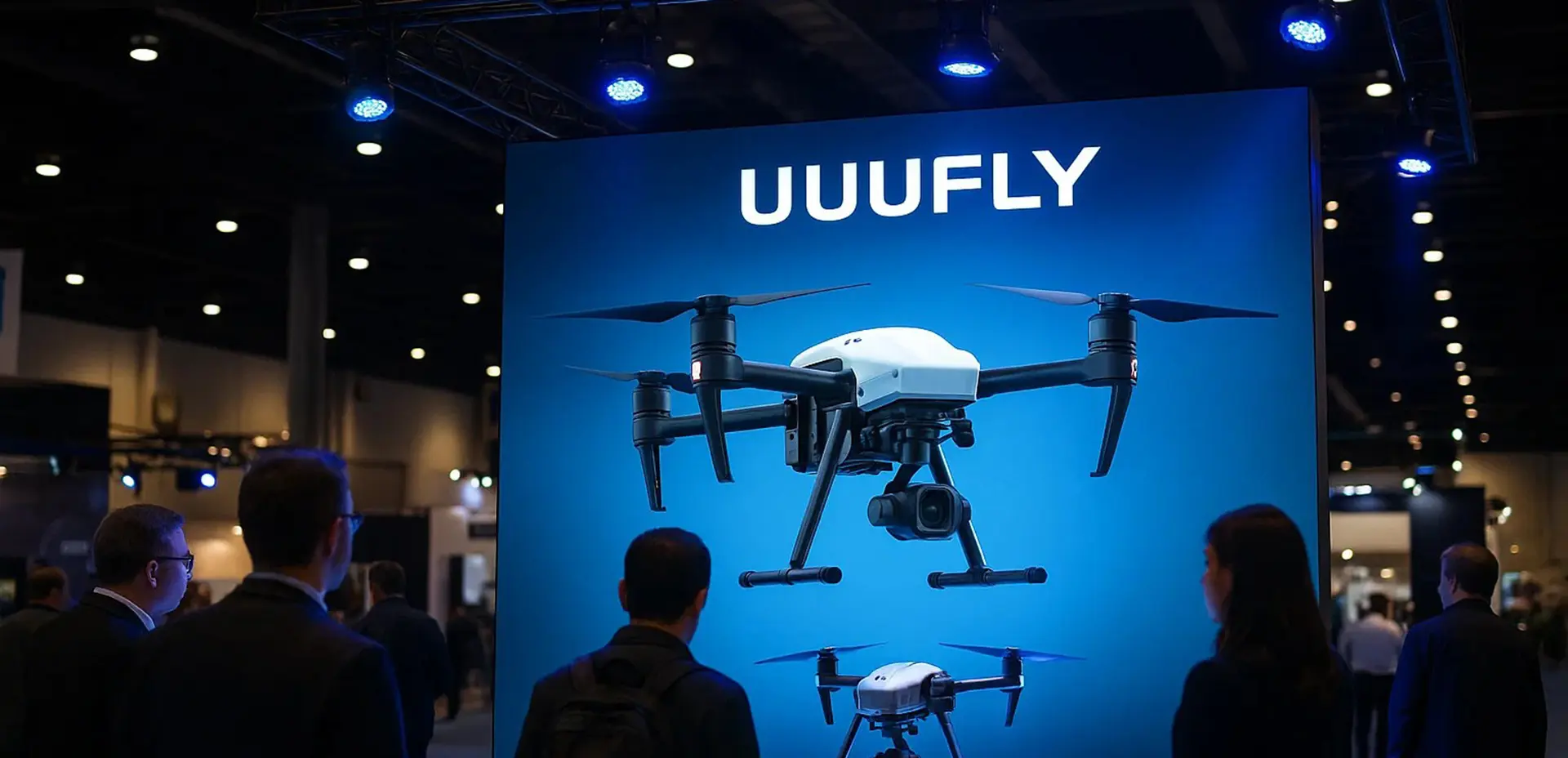
Autonomous Drone Deployment Station

Industrial UAV Procurement FAQ

Answers to common technical, operational, and regulatory questions from enterprise buyers.

1. What details should we consider when sourcing AI-powered inspection drones?
Enterprise buyers should evaluate drone performance across three main pillars: 1. Hardware Durability & Shielding: Ensure the airframe is rated IP54 or higher and features EMC/EMI shielding for high-voltage environments. 2. Sensor Payload Interoperability: Check if payload mounts support standard SDKs and physical quick-release mechanisms. 3. Localized Data Security: Confirm that transmission protocols support AES-256 encryption and provide offline storage options to protect operational data.
2. How do automated docking stations improve operational efficiency?
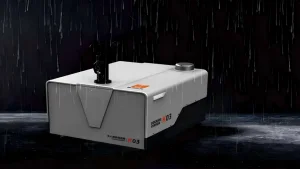
Automated docking stations (like the K03 Autonomous Docking Station or the GUD K01 Dock Kit) act as secure, remote base stations. They feature integrated weather telemetry, air conditioning for battery health, and automated battery swapping or fast-charging loops. This setup enables remote, scheduled BVLOS flights without requiring local pilots on site, reducing routine patrol costs.
3. What advantages do eVTOL platforms offer over multirotor configurations?
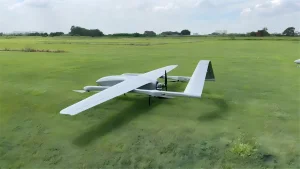
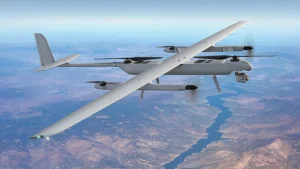
Vertical Take-Off and Landing (eVTOL) platforms (such as the MMC M11 or Dragonfish-25) combine the operational flexibility of multirotors with the cruise efficiency of fixed-wing aircraft. They take off vertically without runways and transition to horizontal flight, making them ideal for long-distance linear surveys like pipelines, national power lines, and border security.
4. How is data compliance (GDPR and regional regulations) handled?
We use end-to-end data encryption. Video feeds, flight telemetry, and collected imagery are encrypted with AES-256 at the edge before transmission. Our software allows enterprises to deploy private clouds on regional servers or run fully offline air-gapped systems, ensuring compliance with local data protection and airspace rules.
5. What is the typical ROI for switching to automated drone inspections?
Most industrial operations recoup their initial investment within 6 to 12 months. Savings are driven by: 1. Reduced Manual Work: Speeding up mapping and inspection operations by up to 5x. 2. Preventive Maintenance: Catching structural and electrical defects early to avoid costly shutdowns. 3. Lower Risk: Mitigating safety hazards and potential liabilities by keeping inspectors on the ground.