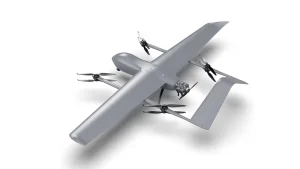
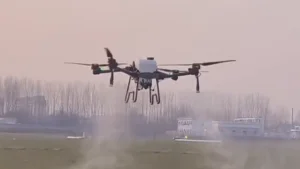
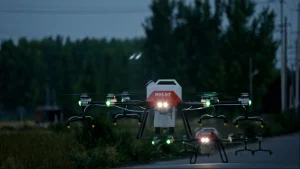
Industrial-grade UAV solutions configured for electromagnetic compatibility (EMC), high-tension route mapping, and dual-sensor thermal payload diagnostics.
Modern electrical transmission networks form the backbone of global industrial development. With networks stretching millions of circuit kilometers across harsh terrains, maintaining high uptime requires rigorous preventive maintenance. Historically, manual utilities inspection and manned helicopter patrols presented massive occupational hazards, long cycle times, and high carbon footprints. Today, Unmanned Aerial Vehicles (UAVs) configured for utility monitoring have changed the paradigm of asset management.
Utility environments expose inspection drones to extreme electromagnetic interference (EMI) generated by high-voltage Alternating Current (AC) and Direct Current (DC) lines. Standard commercial drones struggle under these conditions, encountering compass calibration errors, GPS telemetry drift, and signal degradation. UUUFLY designs and manufactures drones with customized carbon-fiber shielding and specialized avionics to isolate internal flight controllers from localized magnetic field distortions.
Overhead lines require high-precision defect monitoring. Minor component deterioration—such as corroded cotter pins, cracked porcelain insulators, or hot-running splices—can escalate into systemic outages if left unaddressed. To intercept these events, power transmission lines must be scanned using a combination of LiDAR sensors, high-resolution visual cameras, and thermal imagers.
Encroaching flora presents a persistent wildfire and flashover hazard along powerline corridors. Dynamic route-planning software and advanced payload integration allow our drones to generate dense 3D point clouds. These data pipelines compute real-time conductor-to-vegetation clearances, enabling field teams to execute predictive trimming strategies and secure structural integrity across varying climates.
We turn drones from tools into infrastructure, enabling the global low‑altitude economy with engineering rigor and compliance.
UUUFLY stands at the intersection of heavy industrial engineering and autonomous aerospace software. As a dedicated developer of industrial-class drone hardware, our platforms are engineered to perform in environments where consumer-grade systems falter. By focusing on systems integration, strict EMC safety certifications, and standardized payload protocols, we offer robust hardware options to system integrators, power distribution companies, and defense contractors worldwide.
UUUFLY builds repeatable, traceable, and compliant UAV systems through integrated innovation across hardware, algorithms, and data operations. We close the loop of Discover → Decide → Execute → Trace for power, agriculture, and smart‑city customers, delivering measurable aerial productivity at scale.
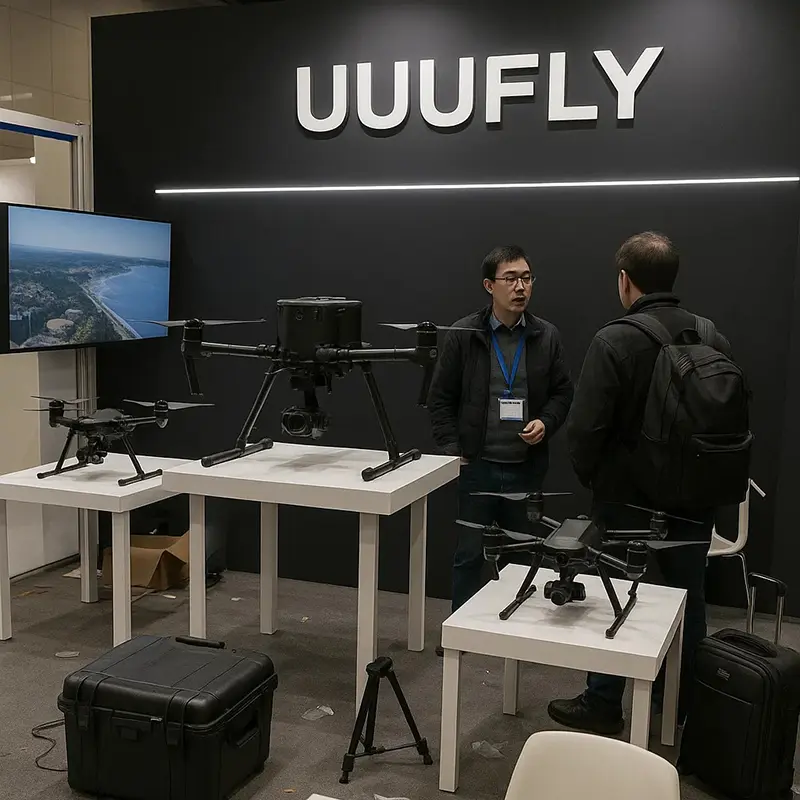
Our solutions cater to four core domains where aerial data collection increases safety margins and reduces operating expenses.
With millimeter‑level positioning and encrypted video links, combined with dual‑spectrum defect detection and AI target recognition, defect discovery efficiency improves by about 40%. Autonomous patrols and emergency response remain reliable in complex environments. The fast‑charge system is compatible with mainstream fleets (80% in 30 minutes), and carbon‑fiber propellers with IP67 motors cover most models. In multiple grid pilots, defect detection reached 99.7%.
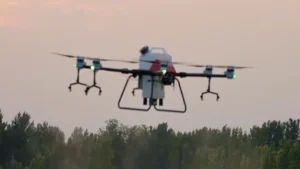
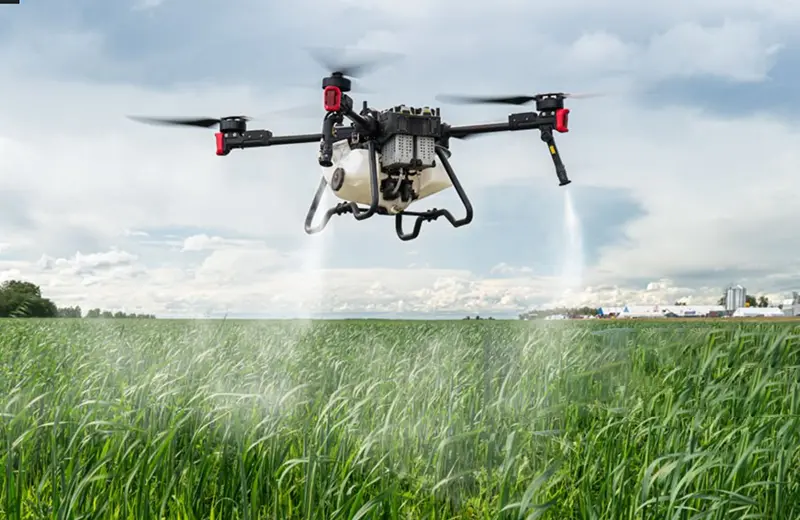
Multispectral payloads and AI analytics enable early diagnosis of pests and diseases (about 98% accuracy). Variable spraying reduces pesticide use by roughly 30%, while a 50Ah battery and corrosion‑resistant tank allow a single flight to cover 200+ mu (≈16 acres). At scale, farms typically see 20–30% lower operating costs.
Combining LiDAR with oblique photogrammetry delivers 0.05‑m 3D mapping, making modeling about 5× faster and reducing cost by 60%. With GDPR‑compliant encrypted transmission and 5G for real‑time cloud analytics, our data underpins urban planning and digital‑twin programs, boosting planning efficiency by around 300% in typical projects.
The platform provides autonomous routes, fleet scheduling, mission orchestration and an edge‑to‑cloud pipeline. Open APIs and message buses integrate seamlessly with enterprise systems to build a secure, observable low‑altitude network.
As deep technological changes reshape the commercial UAV landscape, UUUFLY remains focused on developing sustainable, high-uptime platforms for industrial use.
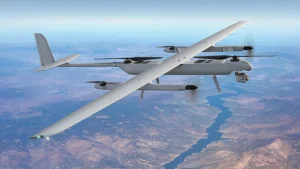
To break through the current 40-50 minute threshold of LiPo configurations, UUUFLY is testing next-generation solid-state batteries. These offer energy densities up to 400 Wh/kg. Furthermore, we are developing hydrogen fuel-cell variants for heavy eVTOL models like the Dragonfish series. These configurations aim to extend flight endurance past 180 minutes, enabling long-range linear corridor mapping in remote areas.
Moving beyond raw data capture, future UUUFLY drone lines will carry on-board TPU (Tensor Processing Unit) accelerator modules. These enable real-time defect evaluation using localized machine-learning algorithms. In practice, the drone will compute anomaly scores for pins, insulators, and damper weights directly at the point of capture, transmitting instant notifications to repair crews via 5G networks.
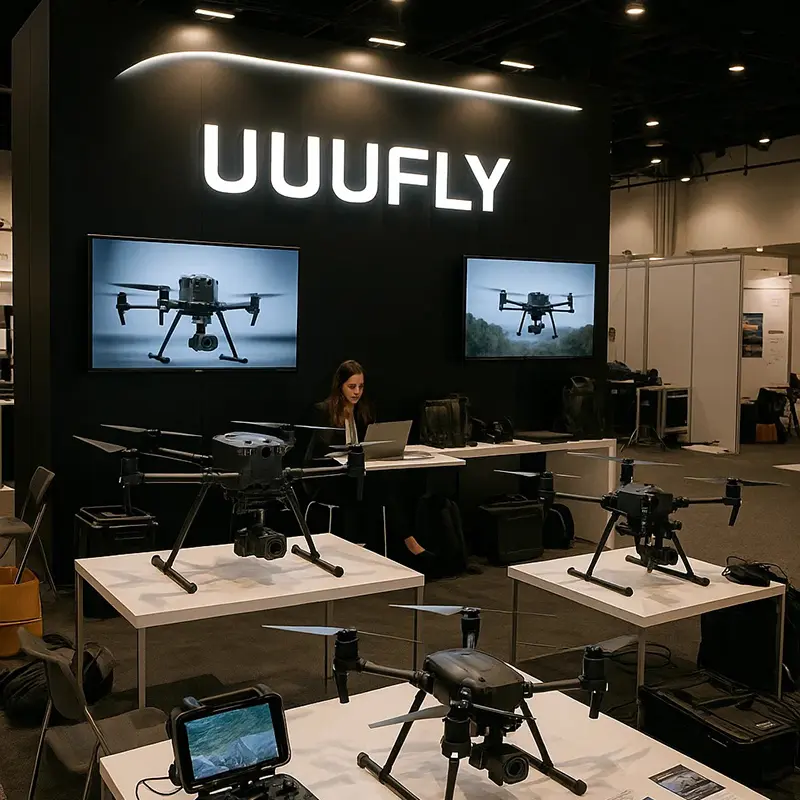
UUUFLY’s primary manufacturing facilities leverage China's deep electronics and aerospace manufacturing clusters. This geographic advantage allows us to control the entire manufacturing process—from high-modulus carbon fiber weaving to PCB assembly and sensor calibration.
Our proximity to primary suppliers reduces lead times for vital drone components, such as high-torque brushless motors, electronic speed controllers (ESCs), and high-density battery packs. UUUFLY maintains cleanroom assembly lines and operates environmental simulation chambers. Here, every powerline inspection drone undergoes structural vibration, thermal cycling (-20°C to +60°C), and EMI stress testing to verify resilience before international dispatch.
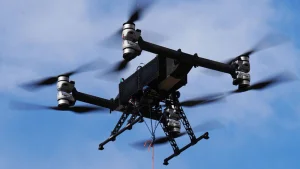
Our factory floors are organized for rapid production scaling. Whether an enterprise client requires a batch of custom heavy-lift coaxial quadcopters (such as the 70kg-class KEEL PRO) or a fleet of long-endurance eVTOL platforms, we can adjust tooling and production configurations quickly. This agility keeps our global partners competitive in cost and delivery time.
Deploying industrial UAV technology requires a balance between flight performance, data protection, and operational safety compliance.
Over 500k+ core components have been shipped to date, serving 300+ enterprise customers across deployments in 30+ cities globally. Our high customer retention rate demonstrates the long-term reliability of our hardware in the field.
Our airframes, electromagnetic compatibility (EMC/EMI) shielding, and critical communication links are designed to industrial specifications. Every structural element is stress-tested to operate reliably near high-voltage lines.
We provide 24/7 multilingual customer success services (covering CN, EN, JP, RU, FR, ES, and AR). Our technical engineers support utilities operators, agricultural operations, and public safety teams globally.
All hardware is certified under CE, FCC, and RoHS. Radio transmission pathways are protected with AES‑256 hardware-level encryption. We support local on-premises data hosting options to help operators comply with strict regional data sovereignty policies.
UUUFLY’s software platform features open API endpoints and standardized Payload SDKs (PSDK). This allows enterprise system integrators to attach specialized diagnostic equipment—such as ultraviolet corona cameras, gas sniffer sensors, or high-definition mapping cameras—directly to the drone's primary bus, routing data through a single communications link.
UUUFLY drones operate across diverse geographic regions and environmental conditions. Below are key scenarios where our platforms are deployed to address specific field challenges.
In high-latitude regions, power lines are vulnerable to heavy ice loading and high winds. UUUFLY drones equipped with heated, self-warming intelligent batteries and IP67 weather protection operate reliably in temperatures down to -25°C. These systems detect thermal anomalies on ice-loaded conductor splices without requiring line de-energization.
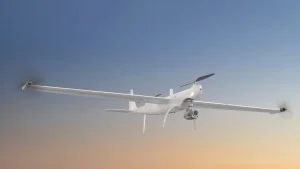
Desert transmission lines face intense heat, sandstorms, and fine dust accumulation, which can lead to insulator flashovers. Utilizing the dustproof capabilities of the custom Dragonfish eVTOL platforms, utilities inspect long stretches of desert grid. The dual-spectrum visual and thermal payloads pinpoint micro-cracks and sand-induced mechanical wear across vast Right-of-Way (ROW) zones.
Inspecting mountain valley spans requires drones that can handle thin air, high winds, and rapid altitude shifts. Utilizing custom high-altitude carbon fiber propellers and optimized motor dynamics, systems like the KEEL MAX maintain stable hovering and precise RTK flight paths. This stability allows them to maneuver safely around high-voltage conductors in mountainous terrain.
When typhoons or earthquakes damage regional infrastructure, assessment speed is critical. UUUFLY's rapid-deployment multi-mission drones can be pre-configured and launched within minutes. Equipped with real-time 5G streaming, these units map structural damage and identify downed lines, providing field crews with the visual data needed to safely plan recovery operations.
Our team brings together experts in aerospace engineering, computer vision, and industrial logistics to build reliable, high-performance systems.
Former industrial UAV product lead; drives product architecture, standardization, and ecosystem partnerships.
Computer vision & autonomy specialist focusing on sensor fusion, target detection, and mission decision systems.
Drives localization and partner-led delivery across the Middle East, Pakistan, and Central Asian markets.
Aerospace & electrical engineer focusing on payload integration, EMC/EMI shielding, and hardware reliability design.
Leads model training and mission orchestration to optimize real-time detection accuracy and decision strategies.
Drives localization, brand presence, and partner‑led delivery across LATAM & MENA regions.
To become the core infrastructure provider for the global low‑altitude economy. We will keep integrating 5G, AI, and hydrogen energy to drive standardized, intelligent, and green aerial operations.
As airspace regulations evolve, UUUFLY works alongside international standard-setting bodies. We are committed to engineering autonomous UAV platforms that operate cleanly, cost-effectively, and with minimal human intervention. Our systems are designed to integrate smoothly into the modern industrial workspace.
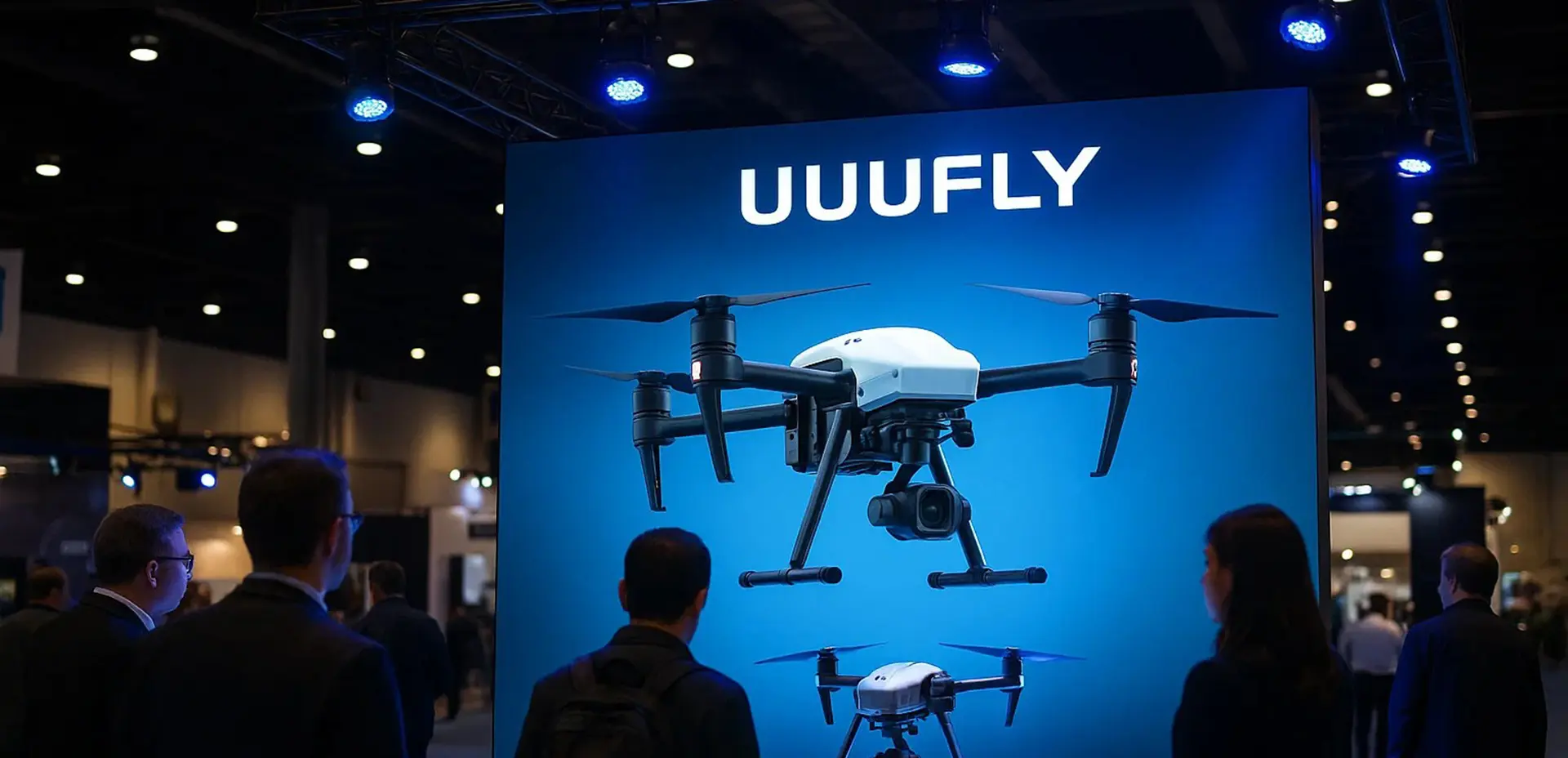
UUUFLY’s research and manufacturing facilities configure custom solutions tailored to specific commercial and industrial sectors.


Find answers to common questions about our industrial inspection platforms, customization options, and global support workflows.
Our UAV frames use carbon fiber with integrated electromagnetic shielding. We isolate the IMUs, compass modules, and flight controllers within Faraday cages. Furthermore, we use dual-RTK antenna systems to provide high-precision positioning, bypassing magnetic compass readings that are prone to interference.
Through our standardized payload SDK, our drones support dual-spectrum thermal and visual cameras, optical zoom cameras, LiDAR scanners, and ultraviolet corona cameras. These can be hot-swapped depending on specific mission requirements.
We prioritize data sovereignty. All radio links use AES-256 encryption. We do not require data uploads to third-party servers; clients can configure our platforms to route all telemetry, point clouds, and imaging data to on-premises servers or private cloud instances, fully complying with GDPR and regional utilities regulations.
Yes, we work directly with system integrators, distributors, and enterprise clients. We can customize motor designs, payload interfaces, battery enclosures, and ground station branding. Please contact our sales team to discuss specific custom requests.
Lead times vary based on configuration and order volume. Standard configurations ship within 15–30 days. Custom configurations requiring specialized engineering or testing generally ship within 45–60 days from deposit verification.
Explore our selection of heavy-lift eVTOL systems, specialized multirotors, high-discharge battery cells, and advanced enterprise flight controllers.
 UUUFLY